
JOYO Guitar Audio Interface for Phone
4.2Editor score
Zero latency monitoring
Pocket-sized portability
Plug and play setup
This guide compares the best audio interfaces for guitar to help musicians find the right gear for recording, streaming, and live performance needs today.
Finding the right audio interface for guitar can transform your home studio into a professional recording space. Whether you are a beginner or a seasoned pro, the right gear ensures your tones shine through with clarity and precision.
We have evaluated ten top-rated models based on build quality, sound fidelity, connectivity options, and value. Each product was selected for its ability to handle instrument inputs cleanly and integrate seamlessly with your existing digital audio workstation setup.
Each pick highlights key features and ideal use cases to help you make an informed decision. Please note that prices and availability may change frequently, so checking current listings is recommended before purchasing any unit.
4.2Editor score
4.6Editor score

4.5Editor score
The following comparison table breaks down the essential specifications of each interface to help you quickly identify which model fits your specific recording environment and connectivity requirements without confusion.



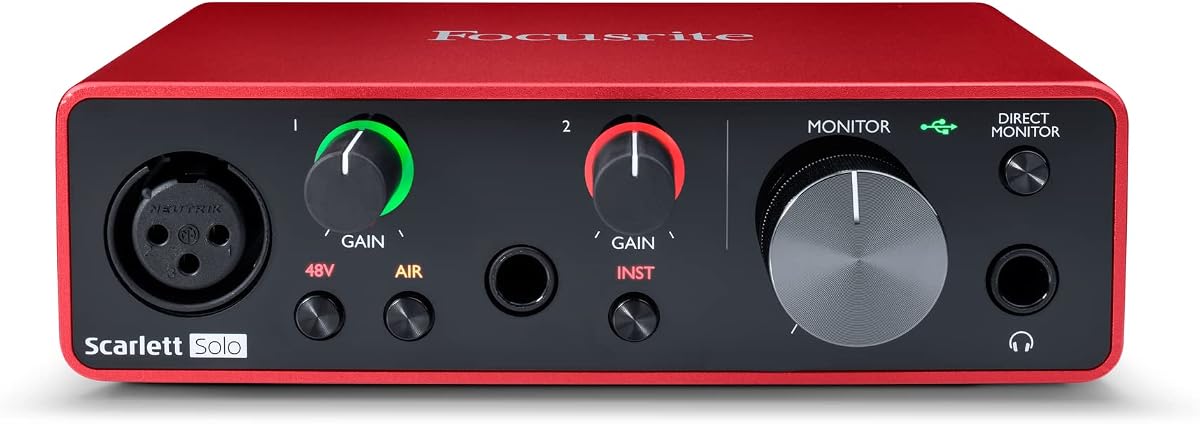
The Focusrite Scarlett Solo 3rd Gen stands out as the top choice for guitarists seeking professional sound in a compact unit. With a rating of 4.6 stars from thousands of users, it delivers crystal clear recordings thanks to its high-performance converters and mic preamps.
We may earn a commission when you buy through this link, at no additional cost to you.
Its standout feature is the switchable Air mode which adds brightness and clarity to acoustic guitars and vocals. The two high-headroom instrument inputs ensure your electric guitar signals do not clip even at high gain settings. You get plenty of included software like Ableton Live Lite to start recording immediately.
While it lacks MIDI I/O which some producers might need, the pure audio performance outweighs this for most solo guitarists. The Gain Halo lights make it easy to set levels quickly without guessing. It balances quality and affordability better than almost any other interface in its class.
This interface is perfect for home studio owners who want studio-grade results without a huge investment. Whether you are recording demos or final tracks, the Scarlett Solo provides the reliability and tone quality you need to succeed.
The Air mode switch on the preamp boosts high frequencies to give your acoustic guitar a sparkling open sound.
Two dedicated instrument inputs handle high output pickups without distortion so your tone stays clean and punchy.
We may earn a commission when you buy through this link, at no additional cost to you.
The JOYO MOMIX CAB is the ideal solution for guitarists who want to record on their phones without carrying a large unit. It scores a 4.2 rating from users who appreciate its simplicity and pocket-friendly design. You simply plug your guitar and headphones in to start.
We may earn a commission when you buy through this link, at no additional cost to you.
Its direct monitoring architecture sends your guitar signal straight to headphones with zero latency while the phone records. This is perfect for live streaming or practicing with backing tracks. The signal indicator light helps you avoid distortion by showing when your input is too hot.
Keep in mind that this interface does not allow you to mute the dry signal so you will always hear your raw guitar. It is not designed for real-time amp sims which may limit creative options. However for the price it is hard to beat for basic recording needs.
If you need a reliable travel companion or a tool for quick song ideas this interface is unbeatable. It removes technical barriers so you can focus purely on your playing and capturing inspiration wherever you go.
Your clean guitar signal passes directly to headphones so you hear yourself instantly without delay or lag.
USB-C and Lightning connectors ensure it works with most modern phones and tablets for broad device support.
We may earn a commission when you buy through this link, at no additional cost to you.
The M-AUDIO M-Track Duo offers exceptional value for musicians who need to record both guitar and vocals simultaneously. With a 4.4 star rating it features two combo inputs that accept microphones or instruments directly. This flexibility makes it a great choice for singer-songwriters.
We may earn a commission when you buy through this link, at no additional cost to you.
Its Crystal preamps deliver transparent sound that captures the natural tone of your equipment without coloring it. The USB/Direct switch ensures you get zero latency monitoring which is critical for staying in time. Included MPC Beats software provides a full suite of tools for production and mastering.
While 48kHz resolution is lower than some competitors it is sufficient for most streaming and podcasting projects. The plastic build is durable enough for home use but may not withstand heavy touring. Overall the dual channel versatility is the main draw here.
Buy this if you need a second input for a microphone or second guitar. It simplifies your signal chain while still delivering professional results that meet industry standards for home recording projects.
Both inputs accept XLR or quarter inch so you can connect mics and guitars at the same time.
High transparency in the preamps ensures your vocals and guitars sound true without added noise or distortion.
We may earn a commission when you buy through this link, at no additional cost to you.
The IK Multimedia iRig USB interface is designed for the modern mobile musician who needs reliable connections to computers and tablets. It earns a 4.3 rating from users who value its seamless integration with iOS devices. The USB-C cable ensures compatibility with newer hardware.
We may earn a commission when you buy through this link, at no additional cost to you.
You get a dedicated Amp out that lets you route processed audio to your amplifier while keeping the recording dry. This feature allows for silent practice through headphones while still using your favorite rig. The direct monitoring function keeps your ears happy during sessions.
Note that it does not work well with legacy Lightning cables so you must use the included USB-C cable. The small form factor means controls can be tricky to use in low light. Still it offers a great balance of features and portability.
This interface is perfect if you use an iPad for recording or need a bridge between your guitar and a computer. It handles the connectivity issues common in mobile setups so you can focus on creating music without technical interruptions.
Use the Amp out jack to send processed signals to your gear while keeping the digital recording clean.
Built to pair with mobile apps and iPads for seamless recording wherever inspiration strikes.
We may earn a commission when you buy through this link, at no additional cost to you.
The MAONO PS22 Lite is built for streamers and content creators who need advanced routing features without the high price tag. It holds a 4.2 rating from users who appreciate its high resolution capabilities. The included ProStudio Routing Software gives you control over inputs and outputs.
We may earn a commission when you buy through this link, at no additional cost to you.
Loopback functionality allows you to mix computer audio with your guitar and mic for live broadcasts. This is essential for gaming streams or podcasting where you want to include music or game sounds. The light ring indicator makes it easy to see input status at a glance.
While the software provides powerful routing it may require some setup time to understand all the features. Ensuring you select the correct driver in your software is critical for low latency. Once set up the performance is stable and reliable for live use.
Streamers will find this interface especially useful because it handles multiple audio sources in one device. It simplifies your live setup and ensures your audience hears everything clearly without echo or feedback during your sessions.
Access virtual channels and loopback mixing to manage audio sources easily for complex live streams.
The dynamic light ring gives you a quick visual cue on audio input levels without needing to check software.
We may earn a commission when you buy through this link, at no additional cost to you.
This 2X2 interface stands out for its premium look and high fidelity audio performance in a budget-friendly package. It scores a 4.3 rating from users who like the illuminated control rings that help visibility in dim studios. It supports loopback for mixing computer audio with your instrument.
We may earn a commission when you buy through this link, at no additional cost to you.
The high-resolution converters ensure you capture every detail of your guitar tone without aliasing or noise. The combo jacks give you flexibility to plug in mics or instruments depending on your session needs. One-cable setup reduces clutter and makes transport easier.
While it lacks a major brand name its performance matches more expensive units. The illuminated rings add a professional touch to your desk. Just ensure you check driver compatibility before purchasing to guarantee smooth operation with your specific OS.
Buy this for a stylish addition to your home studio that does not compromise on audio quality. The aesthetic design combined with functional specs makes it a great choice for creators who care about their workspace look.
Fixed LED light rings on gain knobs help you see settings clearly in dark studio environments.
24-bit/192kHz conversion ensures every nuance of your performance is preserved without loss.
We may earn a commission when you buy through this link, at no additional cost to you.
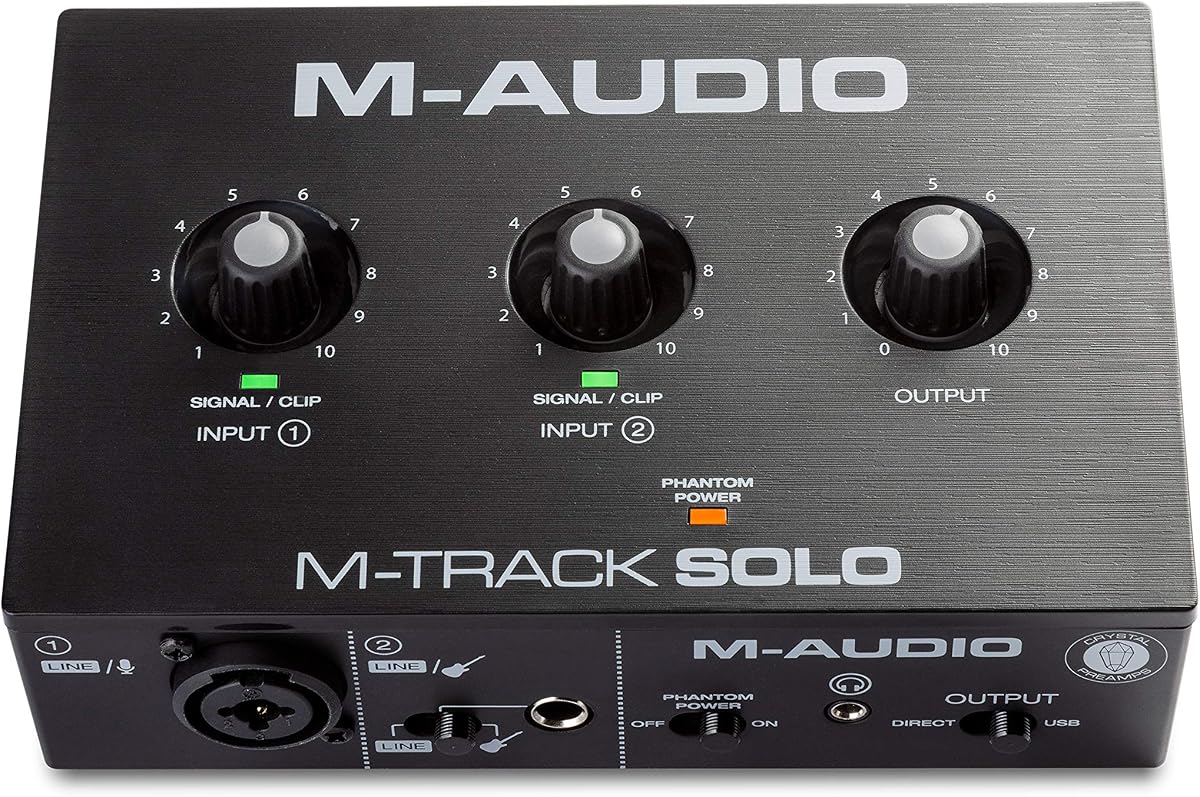
The M-AUDIO M-Track Solo is the most affordable way to get into professional recording for solo guitarists. It receives a 4.3 rating from users who appreciate its simplicity and cost effectiveness. The single combo and instrument input handle both mics and guitars.
We may earn a commission when you buy through this link, at no additional cost to you.
Its transparent Crystal preamp ensures clean signal amplification without adding noise to your tracks. RCA outputs provide an alternative to headphone monitoring which is useful for connecting to external speakers. The included MPC Beats software offers a full production suite for beginners.
It does not offer MIDI connectivity or high-resolution 192kHz conversion which may limit advanced users. However for basic demos and podcasting it offers all you need at a low price. It is a solid entry point into audio interfaces.
Choose this if you want a reliable interface without spending much. It removes the barrier to entry for aspiring musicians and lets you start recording quality tracks immediately.
Combines XLR and instrument jacks so you can connect various sources to a single compact unit.
Transparent amplification keeps your sound clean and true to the source without coloration.
We may earn a commission when you buy through this link, at no additional cost to you.
The Arturia MiniFuse 1 offers robust MIDI connectivity in a compact package which is rare at this price point. With a 4.6 rating from users it stands out for its reliability and comprehensive software bundle. The 5-year warranty shows strong manufacturer confidence in build quality.
We may earn a commission when you buy through this link, at no additional cost to you.
Its USB hub allows you to connect controllers or other gear to the interface saving laptop ports. You get Analog Lab Intro and Guitar Rig 6 LE which helps shape your guitar tones instantly. This bundle adds massive value to the hardware.
The main tradeoff is the higher price compared to basic interfaces without MIDI. However if you plan to use synths or MIDI controllers this is the best value. The durable build ensures it lasts for years of daily use.
This is the perfect choice for producers who use virtual instruments alongside guitar. It bridges the gap between analog performance and digital production with style and reliability.
Dedicated MIDI in and out ports allow you to connect keyboards and controllers without extra adapters.
A built-in USB port lets you plug in other peripherals directly to the interface.
We may earn a commission when you buy through this link, at no additional cost to you.
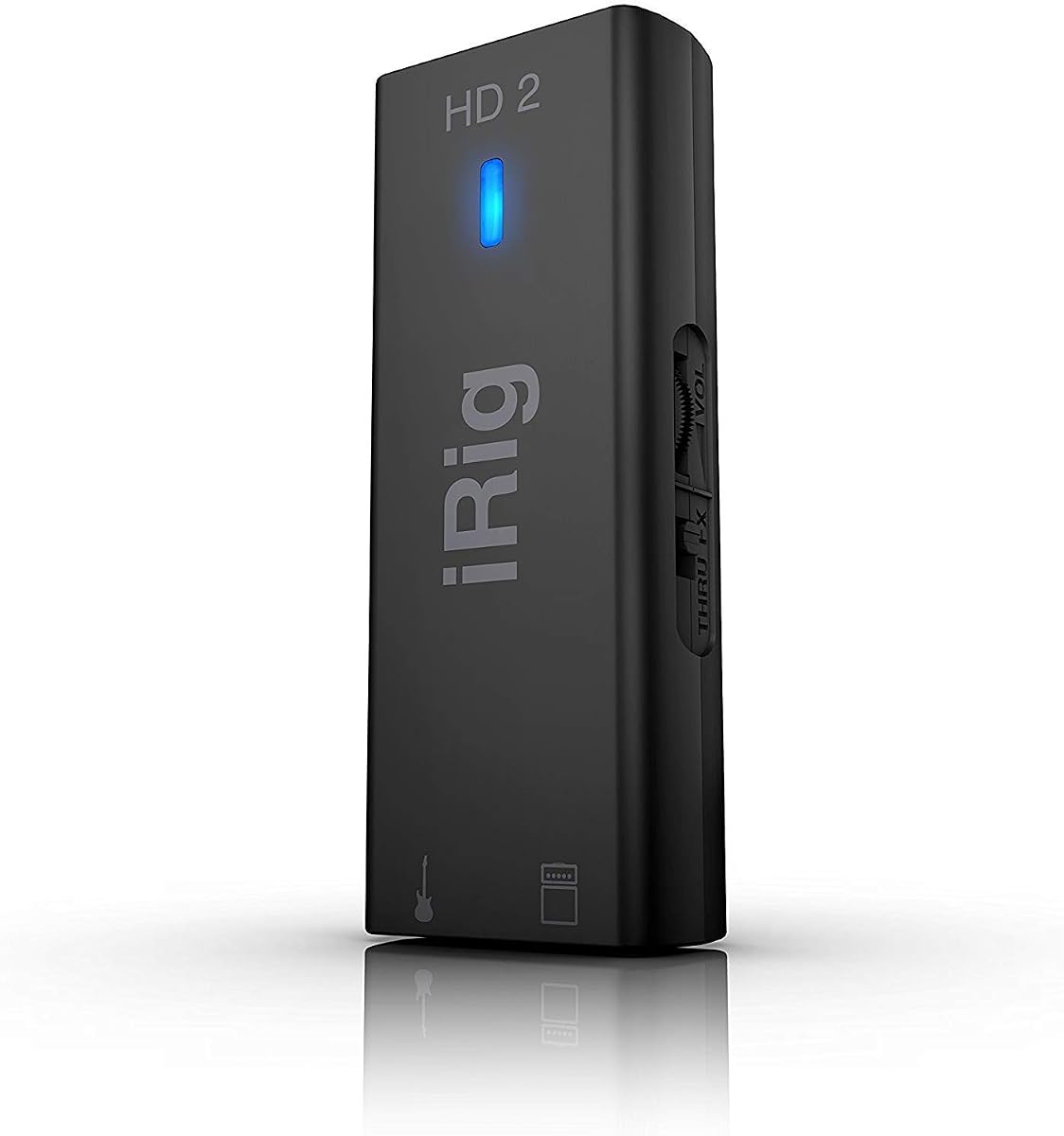
The IK Multimedia iRig HD 2 is a classic choice for mobile guitarists seeking high definition recording. It scores a 4.4 rating from users who value its high sample rate. The 96kHz conversion captures more detail than 48kHz interfaces providing superior fidelity.
We may earn a commission when you buy through this link, at no additional cost to you.
Its FX/Thru switch lets you bypass processing to maintain the original tone when needed. You get multiple cables for different devices so you can connect to iPhone or Android easily. The mic stand mounting clips make it handy for live setups on the go.
While it is great for direct recording it lacks phantom power so you must use dynamic mics. The included cables ensure you are ready to go out of the box. It is a trusted tool for professional mobile recordings.
Use this if you need top quality audio from your phone or tablet. Its high sample rate ensures your tracks meet professional standards even when recorded on mobile devices.
Capture more audio detail with 96kHz conversion for ultra smooth and natural sound reproduction.
Switch between processed audio or pure input signals depending on your recording needs.
We may earn a commission when you buy through this link, at no additional cost to you.
The Fender Quantum HD 2 represents the pinnacle of home studio interfaces with its massive channel count and professional features. It holds a high rating from users who need expandable studio gear. The 20×24 configuration allows for complex recording setups with external gear.
We may earn a commission when you buy through this link, at no additional cost to you.
Front-facing instrument inputs optimize your guitar connection for transparency. The Auto Gain button saves time by setting perfect recording levels instantly. ADAT and S/PDIF I/O let you expand your inputs with digital preamps for larger studios.
Re-amp outputs enable you to send recorded tracks back to your physical amps for re-processing. This is a staple for professional guitar recording. The included Fender Studio app adds value with authentic amp models and effects.
This interface is for serious musicians and producers who need future-proof expansion. Its high-end features ensure you can handle any project without outgrowing your equipment as your studio grows.
Optimized front jacks ensure your guitar signal remains pure without unnecessary signal path coloration.
Automatically sets ideal recording levels to speed up setup and prevent distortion or low signal.
We may earn a commission when you buy through this link, at no additional cost to you.
Selecting the right interface depends on your specific recording needs and budget. This guide breaks down the key factors you should evaluate before buying.
Determine how many instruments and microphones you need to record simultaneously. If you play solo one instrument input is enough but duos will need two or more to track both at once.
Look for interfaces with dedicated instrument inputs that handle high impedance signals. This ensures your electric guitar tone remains clear and bright without loss of high frequencies.
Higher sample rates like 192kHz capture more detail which matters for professional mixes. However 48kHz is sufficient for streaming and most home demos so you do not need the highest rate always.
Bit depth affects dynamic range so aim for 24-bit to avoid noise floors. This allows you to record softer passages without digital distortion or clipping during loud moments.
Zero latency monitoring is essential for playing in time with backing tracks. Look for hardware monitoring switches so you hear your raw signal without software delay affecting your performance.
Direct monitoring routes your input straight to headphones bypassing the computer. This ensures you hear yourself instantly which is critical for recording accurate takes.
USB-C is the modern standard for reliable connection and bus power. Ensure the interface works with your computer type and operating system to avoid driver headaches.
Consider interfaces with MIDI ports if you use controllers. This adds flexibility for composing music alongside your guitar recording sessions without extra adapters.
Many interfaces include DAW software which saves you money on production tools. Check what is included to see if it meets your editing and mixing needs out of the box.
Software like Guitar Rig or Pro Tools Intro helps you craft tones quickly. A good bundle can replace buying separate plugins and plugins immediately.
If you plan to tour choose a model with a rugged metal chassis. Durability prevents failure during transport and ensures longevity over years of gigging or travel.
Pocket sized units are great for songwriting on the go. Lightweight designs fit easily in backpacks so you can capture ideas anywhere without lugging heavy gear.
A longer warranty like five years protects you against defects. This shows the manufacturer stands by the product quality and offers peace of mind for expensive units.
Check the companies customer support reputation for driver updates. Good support ensures you get help quickly if technical issues arise during setup or use.
Budget interfaces offer great value for beginners who just need to record tracks. Prioritize features like phantom power or high inputs over flashy extras you might not use.
Invest in higher tiers if you plan to scale your studio later. Professional interfaces offer expansion options like ADAT that save you from buying new gear as you grow.
Always connect your interface to your computer before plugging in instruments. This ensures the drivers are active and prevents clicking or popping when connecting gear.
Use balanced cables if possible to reduce noise. Even unbalanced cables work but keeping them away from power cables minimizes hum and interference in your recordings.
Clean the jacks regularly with contact cleaner to maintain a good connection. Dust buildup can cause crackling or signal loss which ruins your performance and tone.
Yes an interface provides better sound quality and low latency compared to plugging directly into a phone or computer. It handles impedance and signal levels properly for clear recordings.
Zero latency monitoring routes your guitar signal directly to headphones without passing through the computer. This ensures you hear yourself instantly while recording without delay.
Many modern interfaces support USB-C and Lightning so they work with phones. Just ensure your phone supports OTG and you have the correct adapters for connection.
Most interfaces include DAW software or amp sim plugins to get you started. This adds value and saves you from buying production tools separately initially.
No phantom power is only for condenser microphones. Electric guitars use instrument inputs so phantom power does not affect them but ensure it can be turned off.
USB-C provides faster data transfer and often supports bus power better. It is the modern standard for newer computers and mobile devices ensuring future proofing.
The Focusrite Scarlett Solo 3rd Gen stands out as the top choice for its balance of sound quality and ease of use. For mobile needs the JOYO MOMIX CAB offers unmatched portability at a low cost.
Consider your workflow whether you need multiple inputs or MIDI support. Higher end options like the Fender Quantum HD 2 provide room to grow your studio significantly.
Check current prices and availability before purchasing as offers change often. Finding the right fit ensures you capture your best performances without technical frustration.