
Zoom H1 XLR 2-Channel Recorder
4.5Editor score
Two XLR inputs
OLED waveform display
32-bit recording
This guide compares the top audio field recorders for film production, highlighting features like 32-bit float, timecode sync, and portability for professionals
Audio field recorders are essential tools for capturing high-quality sound on film sets and in the field. They ensure dialogue and ambient sounds are recorded clearly without distortion or background noise interference.
We compared ten leading models based on input options, recording formats, timecode capabilities, and overall build quality. Our analysis focuses on devices that meet the rigorous demands of professional filmmakers and content creators today.
Each pick showcases unique strengths for different production needs, from budget-friendly handhelds to multi-track professional rigs. Note that prices and availability can change frequently, so check current listings before purchasing.
4.5Editor score

4.7Editor score
4.6Editor score
This side-by-side comparison highlights key specifications across all ten models to help you find the right fit for your specific production workflow and budget constraints.



The Zoom F6 Professional Field Recorder stands out as a top choice for filmmakers needing reliable audio capture. With a 4.7 rating, it delivers pristine sound through 32-bit float recording that handles quiet dialogue and loud action without clipping.
We may earn a commission when you buy through this link, at no additional cost to you.
Its six XLR inputs allow simultaneous recording of multiple microphones, supporting up to 14 tracks for complex shoots. The built-in timecode I/O ensures frame-accurate synchronization with video, which is critical for post-production workflows.
While the price point is higher than entry-level units, the investment pays off in flexibility and reliability. The ultra-portable design means it travels well, though the menu system may require some time to master for new users.
This model is ideal for serious film crews and sound recordists who need professional features in a portable package. It balances power and size effectively, making it a standout tool for location sound recording.
32-bit float recording captures whispers and screams equally well without distortion or manual gain adjustments during critical moments on set.
Timecode I/O keeps audio locked to video precisely, reducing editing time and ensuring professional sync standards are met effortlessly.
We may earn a commission when you buy through this link, at no additional cost to you.
The Zoom F3 Professional Field Recorder is built for real-world recording where second chances are rare. It offers 32-bit float recording to capture everything from quiet dialogue to sudden peaks without needing to adjust levels constantly.
We may earn a commission when you buy through this link, at no additional cost to you.
Dual locking XLR inputs keep connections secure when mounted out of reach or part of a larger rig. Ultra-low-noise preamps ensure clean, consistent audio even in unpredictable environments where noise control is difficult.
The compact form factor makes it perfect for run-and-gun filmmaking where space and weight matter. However, with only two inputs it may limit multi-mic setups without an external mixer or splitter.
This recorder suits independent filmmakers and musicians who need professional reliability without the bulk of larger units. It provides a solid foundation for high-quality field audio in a portable and affordable package.
Dual locking XLR inputs ensure cables stay connected during movement, preventing accidental disconnections during critical recording sessions on location.
Ultra-low-noise preamps deliver clean audio even in noisy environments, giving you confidence in the clarity of your recorded tracks.
We may earn a commission when you buy through this link, at no additional cost to you.
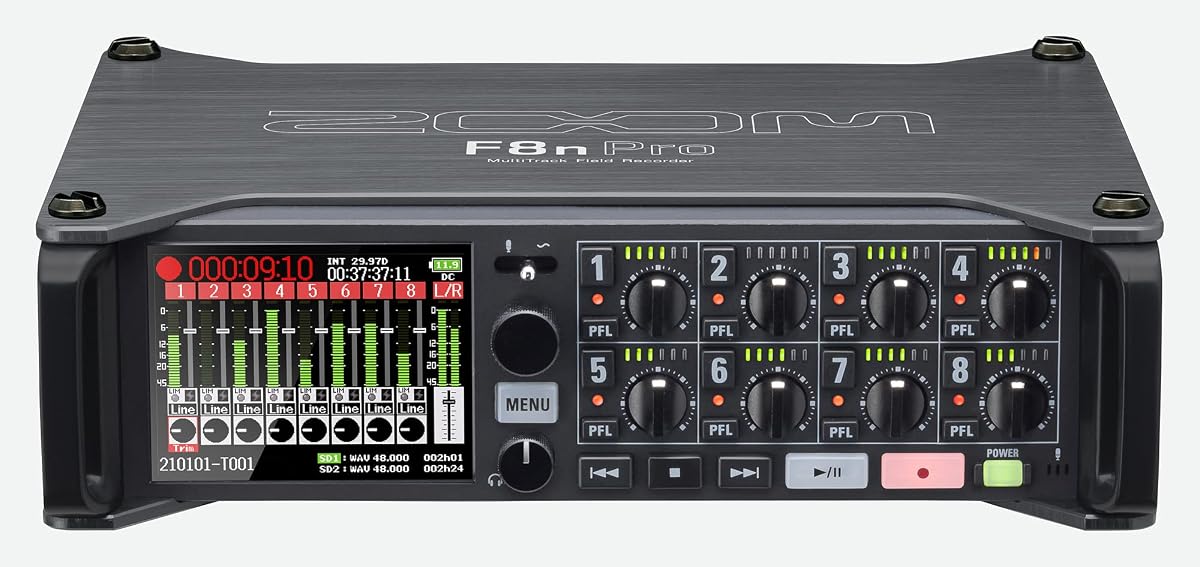
The Zoom F8n Pro Field Recorder is the choice for professional film and field audio with eight inputs and ten tracks. It uses 32-bit float recording to capture clip-free audio across the full dynamic range for critical takes on set.
We may earn a commission when you buy through this link, at no additional cost to you.
High-quality preamps provide up to 75dB gain with -127dBu EIN, ensuring pristine audio whether recording quiet dialogue or dynamic action sequences. Dual SD card slots allow redundant recording for peace of mind during long shoots.
Industry-leading timecode accuracy at 0.2ppm keeps tracks perfectly aligned with picture on or off set. While it is larger and more expensive than other units, the flexibility and features justify the investment for serious productions.
This unit is ideal for multi-mic setups where precision and reliability are non-negotiable. It offers complete control over recording and monitoring, making it a top-tier option for professional sound recordists.
Dual SD card slots enable redundant recording so if one card fails, your audio is safely saved on another without losing critical takes.
High gain preamps with low noise floor capture delicate sounds clearly, giving you the best possible source material for post-production.
We may earn a commission when you buy through this link, at no additional cost to you.
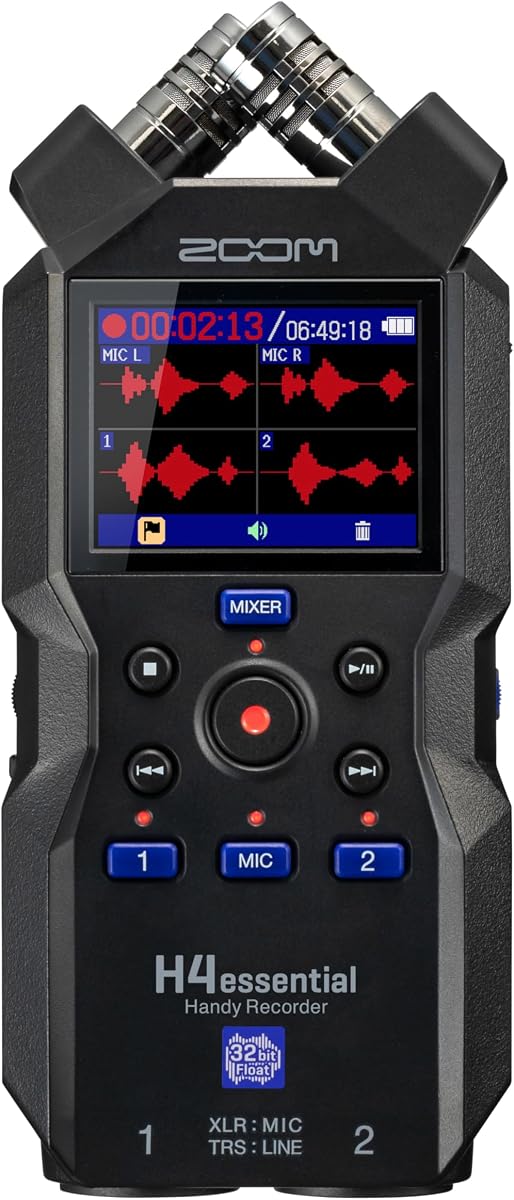
The Zoom H4 Essential Handheld Recorder captures bigger projects with confidence as a versatile 4-track device. It helps record music, interviews, and video audio without worrying about distorted takes thanks to clear sound capture.
We may earn a commission when you buy through this link, at no additional cost to you.
You can use built-in stereo microphones, connect external mics, or plug into a mixer with two XLR/TRS inputs. Recording to device and SD card offers flexibility while spoken menu guidance makes it accessible for visually impaired users.
It balances simplicity with essential professional features, making it ideal for creators needing quick setup and reliable results. The USB-C connection allows direct recording to phones or computers for streamlined workflows.
This model works well for podcasters and indie filmmakers who want a step up from basic recorders without complexity. It delivers clear audio for creative work across various settings and project types.
Spoken menu guidance helps visually impaired users navigate settings quickly, ensuring everyone can access professional recording capabilities easily.
USB-C connectivity allows direct streaming or recording to devices while saving backups to SD card for secure multi-platform workflows.
We may earn a commission when you buy through this link, at no additional cost to you.
The Zoom H1 XLR 2-Channel Recorder delivers simple setup with pro-quality results using 32-bit / 96kHz recording. It is perfect for interviews, podcasts, and everyday recording needs without complex configuration steps.
We may earn a commission when you buy through this link, at no additional cost to you.
Two XLR/TRS combo inputs let you connect microphones and instruments for versatile setups. The OLED waveform display makes it easy to monitor levels and ensure clean recordings at a glance during operation.
With 3.5mm inputs and SDXC support up to 1TB it offers great flexibility for extended sessions. While it lacks some advanced features of higher models it provides essential tools for quality audio capture.
This recorder is ideal for beginners and budget-conscious filmmakers who need reliable performance without overspending. It delivers clear, detailed sound suitable for a wide range of content creation tasks.
The OLED waveform display lets you see audio levels instantly, helping you avoid distortion and ensure consistent recording quality.
Combo inputs accept both XLR and TRS connectors, allowing you to use professional mics and consumer gear with ease.
We may earn a commission when you buy through this link, at no additional cost to you.
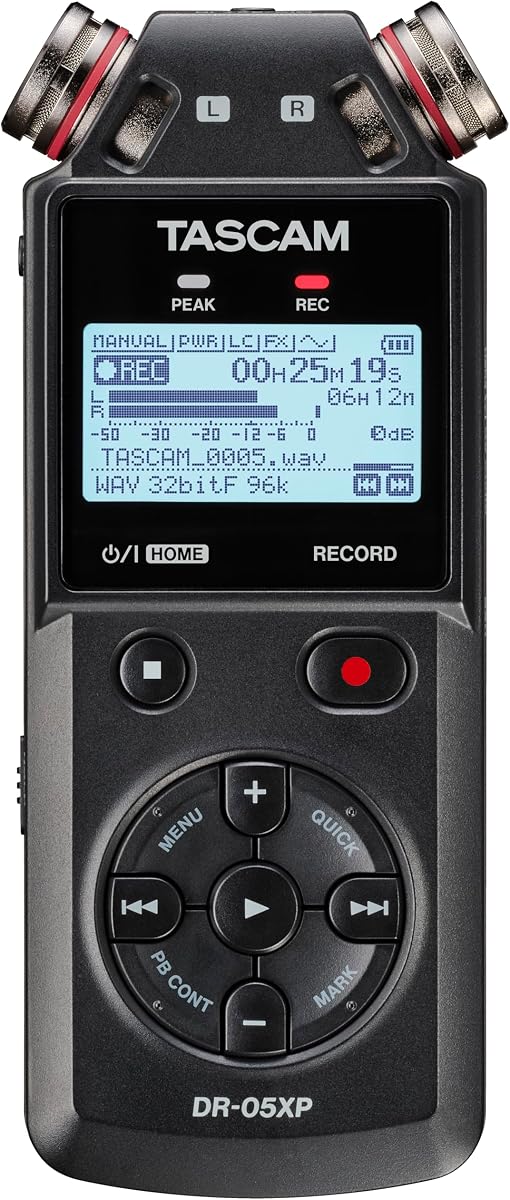
The TASCAM DR-05XP portable handheld recorder makes it easy to capture pro-quality recordings for video and meetings. It supports 32-bit float recording to handle a wide dynamic range without clipping during loud environments.
We may earn a commission when you buy through this link, at no additional cost to you.
Flexible recording modes include various bit rates and frequencies along with MP3 for convenience. Omnidirectional condenser microphones handle sources up to 125dB SPL ensuring clear audio even in busy or noisy locations.
Up to 17.5 hours of operation with AA batteries makes it reliable for all-day use without frequent changes. The USB-C interface allows direct connection to computers for streaming or editing workflows.
This unit is suited for journalists and vloggers needing lightweight, dependable audio capture on the go. While it lacks external inputs, its built-in quality and battery life make it a strong portable option.
Up to 17.5 hours of operation ensures you can record long sessions without worrying about running out of power mid-session.
Multiple format support allows you to choose between high-quality WAV or smaller MP3 files based on your storage needs.
We may earn a commission when you buy through this link, at no additional cost to you.
The Zoom H5 4-Track Handheld Recorder uses a system of interchangeable input capsules that can be swapped out as easily as a camera lens. It includes a detachable X/Y capsule with shock mounted mics for reduced handling noise.
We may earn a commission when you buy through this link, at no additional cost to you.
Four-track simultaneous recording allows layering multiple sounds while two mic/line inputs with XLR/TRS combo connectors support external gear. Phantom power and pads give further control over source audio quality.
It runs on AA batteries and records to SD cards with a safety net feature to protect recordings. Multichannel and stereo USB interface enables PC/Mac use with loop back functionality for advanced streaming needs.
This model remains a favorite for its modularity and proven reliability across many production years. It offers a great balance of portability and features for musicians and filmmakers alike.
Interchangeable capsules let you adapt the recorder to different situations, from stereo field recording to mono interview setups.
Multichannel USB interface allows you to use the unit as an audio interface for computers without additional hardware.
We may earn a commission when you buy through this link, at no additional cost to you.
The TASCAM DR-10L Pro Field Recorder captures superior personal audio effortlessly with 32-bit float recording for whispers to screams. It now supports LTC Jam Sync for seamless timecode synchronization ideal for multi-device setups and streamlined workflows.
We may earn a commission when you buy through this link, at no additional cost to you.
Worry-free recording means you can focus on content while the unit handles levels automatically. The included TM-10L clip-on lavalier microphone is perfectly matched to deliver clear, lifelike audio even in busy settings.
High-capacity microSDXC cards support limitless storage while Atomos wireless timecode compatibility expands connectivity options. The app allows master control of up to five simultaneous recordings for complex production needs.
This device is perfect for solo creators and journalists who need discreet, reliable audio capture on a person. It simplifies personal sound recording without sacrificing professional synchronization and storage features.
Included lavalier mic is matched for optimal performance, making it easy to get clear speech audio without extra purchase.
LTC Jam Sync ensures your recordings stay synced with video frames even when using multiple devices across a set.
We may earn a commission when you buy through this link, at no additional cost to you.
The Zoom H1 Essential Recorder helps create content with better sound by capturing clear stereo audio for videos and tutorials. It is ready when inspiration hits for rehearsals or live music with detailed sound easy to capture in the moment.
We may earn a commission when you buy through this link, at no additional cost to you.
Record conversations, podcasts, and interviews with natural stereo sound that helps voices come through clearly. It captures real-world sound like ambience and nature for production and documentation needs with high fidelity.
Plug in via USB-C and use it as a microphone for livestreams and remote meetings. The compact design ensures you can keep it with you without it getting in the way of your creative process.
This recorder suits beginners needing an upgrade from phone audio without investing in a professional rig. It delivers polished sound for content creators looking to improve audio quality simply and affordably.
Built-in stereo microphones record natural audio without extra gear, giving your videos and podcasts better sound instantly.
Connect via USB-C to use as a high-quality microphone for livestreams and calls, adding versatility to your setup.
We may earn a commission when you buy through this link, at no additional cost to you.
The Zoom F2 Lavalier Recorder is the smallest 32-bit float recorder you can wear, capturing clip-free audio at any volume. It records at 44.1kHz or 48kHz without ever needing to adjust gain so you can focus on content.
We may earn a commission when you buy through this link, at no additional cost to you.
Comes with an LMF-2 omnidirectional lavalier microphone featuring a screw-lock connector and windscreen for discreet placement. Fifteen hours on two AAA batteries make it power-efficient for journalists and videographers on the go.
MicroSD cards up to 512GB provide ample storage for long-form recordings. The REC Hold switch prevents accidental stops while the precision clock ensures perfect audio and video sync for professional production.
This unit is ideal for solo shoots and interviews where space and simplicity are key. It simplifies audio recording while maintaining professional quality and reliability in a tiny form factor.
The smallest wearable recorder means it hides easily on talent, delivering professional audio without drawing attention on camera.
REC Hold and precision clock prevent accidental stops and ensure perfect sync, protecting critical footage during important shoots.
We may earn a commission when you buy through this link, at no additional cost to you.
Choosing the right field recorder requires considering inputs, recording format, synchronization options, and portability needs.
Look for enough XLR inputs to connect all your microphones. Some units have built-in mics while others rely entirely on external inputs for flexibility.
Ensure the unit supports phantom power if you plan to use condenser microphones on set.
32-bit float recording is now essential for avoiding clipping during dynamic scenes. It lets you adjust levels after recording without losing quality or detail.
Higher sample rates like 96kHz can provide more fidelity for post-production processing and restoration work.
For multi-camera shoots or separate audio/video recording, timecode I/O ensures perfect synchronization. This saves hours in editing and prevents sync drift.
Check if the unit supports LTC or other protocols compatible with your video cameras and production gear.
Consider weight and size if you are filming on location or moving frequently. Handheld units offer quick access while larger boxes suit stationary setups.
Battery life and power options should match the length of your shoots without frequent interruptions.
Check SD card compatibility to ensure you can store long recordings or high-resolution files. Support for large capacity cards is crucial for full day shoots.
Redundant recording on dual slots provides safety against card failure during critical takes.
A clear display and intuitive controls help avoid mistakes on set. Menu systems should be easy to navigate in bright or noisy conditions.
Physical knobs for gain control are often preferred over touchscreen interfaces for quick adjustments.
Invest in features you will actually use. Entry-level units offer good quality for simple interviews while multi-track models suit complex productions.
Consider long-term reliability and support availability when evaluating total cost of ownership.
USB-C or traditional USB allows streaming or direct file transfer. This is useful for mobile production workflows or immediate review on laptops.
Audio monitoring options like headphone jacks are essential for real-time quality checks during recording.
Always fully charge batteries before a shoot and carry spares. Proper power management prevents sudden shutdowns and ensures you never miss a take.
Store microphones and cables separately in padded cases to prevent damage during transport. Avoid exposing the device to extreme temperatures or humidity when not in use.
Format SD cards regularly on the device itself to maintain file system health and avoid corruption during critical recording sessions.
32-bit float recording captures a wider dynamic range than traditional formats, allowing you to adjust levels after recording without clipping. This ensures that quiet and loud sounds are captured clearly, providing more flexibility during post-production editing.
Not for every project, but it is essential for multi-camera setups or when recording sound separately. It synchronizes audio and video precisely, saving significant time during editing and reducing errors.
Many modern field recorders function as USB audio interfaces for computers. This allows you to stream audio directly for podcasts, streaming, or recording in software applications without extra gear.
For simple setups two to four inputs are usually enough. Complex productions with multiple actors may require eight inputs or an external mixer to capture all dialogue clearly.
Use high-speed SDXC cards with at least 64GB capacity for long shoots. Ensure the card matches the recommended speed class to avoid dropped frames or recording errors.
Built-in mics are convenient for quick demos but external microphones provide better quality. For film and interviews external mics reduce noise and capture clearer voice details.
Battery life varies by model and usage but many offer 10 to 17 hours with AA batteries. Always carry spares for long shoots and monitor levels before critical scenes.
We have explored ten top audio field recorders for film, highlighting the Zoom F6 as the editor's choice for its balance of inputs and float recording capabilities.
Prioritize features like timecode support and input count based on your production scale. Budget models like the H1 XLR offer solid performance for independent creators seeking simplicity.
Always check current prices and stock before purchasing since availability changes frequently. The right recorder can make a huge difference in the quality and reliability of your sound production.