
LAFVIN R3 Camera Smart Robot Car
4.5Editor score
Affordable price point
Wi-Fi video streaming
Five operation modes
This guide compares the top ten Arduino robot kits for beginners and makers, evaluating features like FPV, sensors, and coding compatibility to help you choose
Arduino robot kits offer an engaging way to learn electronics and programming through hands-on building. These projects transform abstract coding concepts into physical movement, making STEM education accessible and fun for students and hobbyists alike.
We evaluated ten leading kits based on assembly complexity, sensor variety, coding flexibility, and build quality. Our analysis focuses on real-world usability, ensuring each recommendation supports meaningful learning outcomes and long-term project expansion.
Each selection highlights unique strengths like mobile app control, visual programming support, or advanced motion capabilities. Prices and availability change frequently, so verify current details before purchasing to ensure the best fit for your goals.
4.5Editor score

4.5Editor score

4.3Editor score
The following table provides a side-by-side comparison of all ten kits, highlighting key specifications and capabilities to help you quickly identify the right match for your skill level and interests.


This kit stands out as a premier choice for those seeking a comprehensive robotics experience with modern features. It integrates a camera and Wi-Fi module directly into the chassis for real-time FPV control.
We may earn a commission when you buy through this link, at no additional cost to you.
The assembly process is simplified by keyed connectors that reduce wiring errors for beginners. Example programs cover line tracking and obstacle avoidance, allowing immediate success after setup.
While assembly takes time, the guided instructions ensure even new users can complete the build. The balance of visual coding support and text-based programming grows well with skills.
Ideal for students or hobbyists wanting a complete package with camera streaming. Its blend of hardware quality and software resources makes it a top recommendation for most buyers.
The onboard camera streams live video to your phone, enabling first-person view driving that adds realism to your robotics experiments.
Open ports allow you to add extra sensors or actuators later, supporting custom projects that extend beyond the included components.
We may earn a commission when you buy through this link, at no additional cost to you.
Designed specifically for younger learners, this kit balances durability with approachability. Its metal frame withstands rough handling, making it ideal for classroom or home use.
We may earn a commission when you buy through this link, at no additional cost to you.
The block-based coding interface lowers barriers to entry, allowing kids to see immediate results. Tutorials guide them from simple movements to logic challenges seamlessly.
Batteries must be purchased separately, which is a minor oversight given the focus on immediate play. However, the build process is robust enough to encourage repeated assembly.
Parents looking for a gift that combines play and education will find this highly rewarding. Its longevity and expandability ensure it grows with the child's interests.
Children can use drag-and-drop blocks to program movements, fostering logic skills without needing complex syntax knowledge initially.
The system supports over 100 modules and 500 parts, letting users expand functionality with sensors or other accessories later on.
We may earn a commission when you buy through this link, at no additional cost to you.
This kit offers a rugged alternative to wheeled robots with its tracked design. It handles varied surfaces better, making it suitable for outdoor or rough terrain testing.
We may earn a commission when you buy through this link, at no additional cost to you.
The adjustable servo-mounted camera enhances inspection capabilities by letting users aim the lens during operation. This adds a layer of realism to FPV navigation.
While the build is solid, it lacks soldering components, which limits some advanced customization for experts. However, this ensures ease of use for younger or novice builders.
Recommended for those interested in tank mechanics and robust builds. The combination of tracks and live video provides a unique play experience distinct from standard cars.
Tracks provide superior traction on uneven surfaces compared to wheels, enabling navigation across carpet or outdoor obstacles.
The camera angle can be changed via servo control, allowing dynamic viewing angles that enhance remote inspection capabilities.
We may earn a commission when you buy through this link, at no additional cost to you.
A standout for physics enthusiasts, this two-wheeled robot stays upright using motion sensing and feedback loops. It teaches concepts of balance and control that differ from standard cars.
We may earn a commission when you buy through this link, at no additional cost to you.
Multiple modes like bounce and obstacle avoidance keep the experience engaging. The mobile app and IR remote allow flexible interaction during testing.
Tuning the balance parameters may require some patience and understanding of sensor thresholds. However, the provided tutorials simplify this process for most users.
Best for those wanting a technical challenge beyond basic driving. Its unique mechanics make it a conversation starter at events or in engineering-focused environments.
Building this kit illustrates gyroscopic stabilization concepts, giving hands-on insight into how real-world balancing systems operate.
Six different modes allow users to switch between driving, bouncing, and obstacle avoidance, keeping engagement levels high.
We may earn a commission when you buy through this link, at no additional cost to you.
This kit introduces omnidirectional wheels that allow side-to-side and diagonal motion. It is a great way to explore advanced movement mechanics in a fun package.
We may earn a commission when you buy through this link, at no additional cost to you.
The follow mode and obstacle avoidance work well for navigating dynamic environments. Educational resources focus on practical programming scenarios for students.
Batteries are not included, which requires an extra purchase step. However, the chassis is sturdy enough for repeated assembly and disassembly during learning.
Ideal for users seeking specialized mobility features. Its unique wheel design differentiates it from standard kits, offering new movement possibilities.
Mecanum wheels enable the robot to move in any direction without turning, adding complex maneuvers to your projects.
Story-based tutorials help students connect programming logic to real-world actions, enhancing retention and engagement.
We may earn a commission when you buy through this link, at no additional cost to you.
Offering impressive value, this kit includes a camera and Wi-Fi module at a competitive price point. It brings FPV capabilities to budget-conscious makers without sacrificing features.
We may earn a commission when you buy through this link, at no additional cost to you.
The open-source ecosystem provides access to free tutorials and code, supporting community learning. Sensors connect easily, simplifying the wiring process for novices.
Full DIY assembly is required, which can be time-consuming but reinforces hands-on skills. The build quality is adequate for typical indoor use.
Perfect for those prioritizing cost without wanting to compromise on core capabilities. Its affordability makes it a great entry point into robotics.
Despite the low price, the kit includes essential components like a camera and Wi-Fi module that usually cost extra.
Open-source code libraries allow users to download and modify existing projects, accelerating the learning curve.
We may earn a commission when you buy through this link, at no additional cost to you.
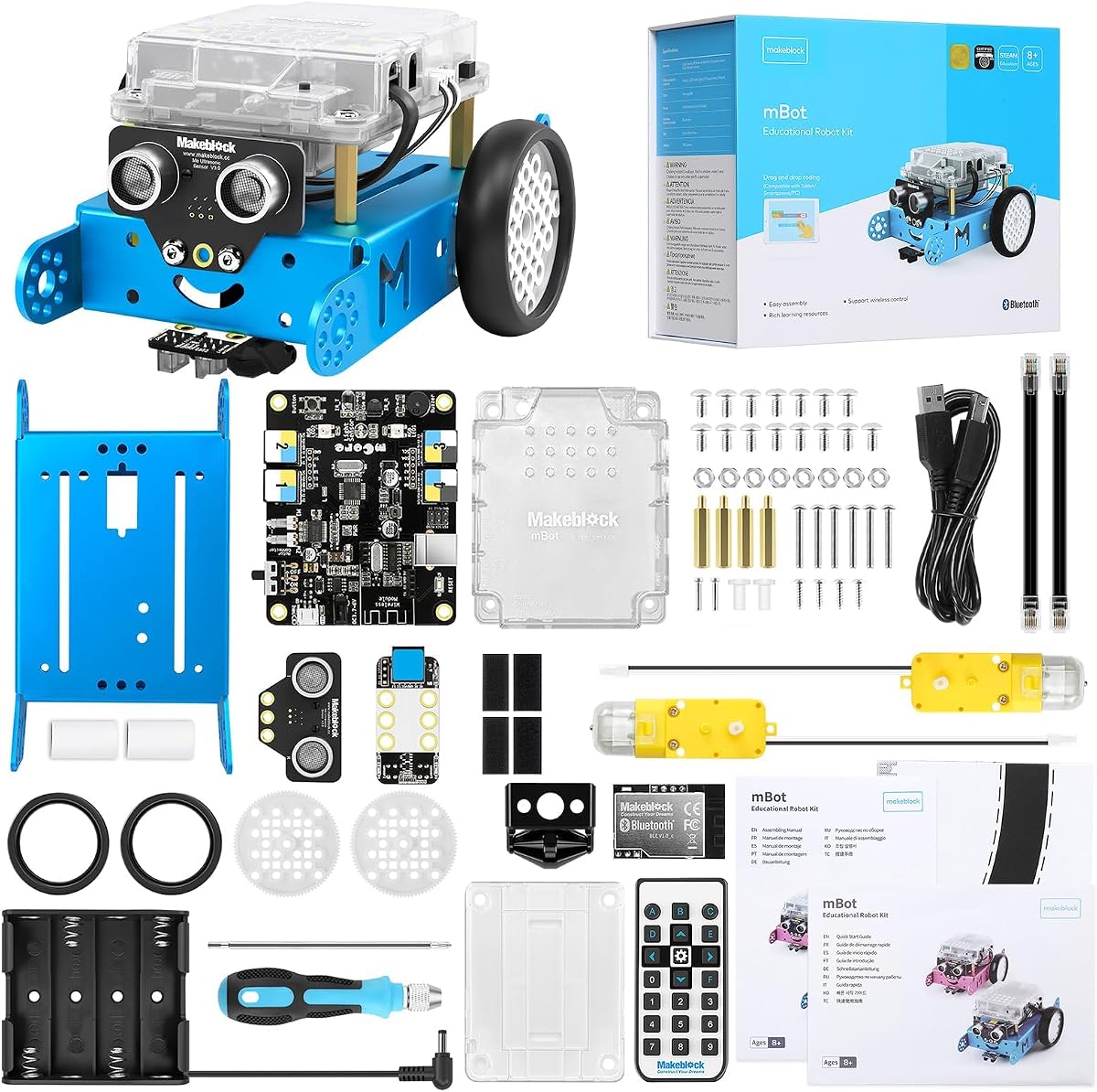
This versatile kit lets you build a car, tank, or arm, offering varied experiences within a single purchase. It appeals to users who enjoy reconfiguring their projects.
We may earn a commission when you buy through this link, at no additional cost to you.
The 5DOF robotic arm adds a distinct functional layer, allowing object manipulation. Tracks ensure stability on outdoor or uneven surfaces.
Build quality and instructions have received mixed feedback, so patience is key. HD assembly videos help bridge any gaps in understanding the assembly steps.
Best for hobbyists wanting variety. The ability to switch between different form factors keeps the experience fresh and engaging.
Users can reconfigure the same components into different robots, extending the play life of the kit.
The robotic arm can grab and lift items, introducing concepts of kinematics and servo control.
We may earn a commission when you buy through this link, at no additional cost to you.
With a vast array of components and online courses, this kit supports a wide learning journey. It is designed to grow with users from beginners to advanced makers.
We may earn a commission when you buy through this link, at no additional cost to you.
Projects range from simple LED blinking to complex IoT and robot car builds. Video tutorials make the learning process more accessible.
The sheer number of parts can be overwhelming initially. Organizing them is necessary to keep the building process smooth and efficient.
Ideal for long-term learners who value education over quick assembly. Its structured curriculum helps users master concepts systematically.
The course structure progresses logically, ensuring concepts build on each other for a thorough understanding of electronics.
A dedicated support forum allows users to ask questions and find solutions quickly when issues arise.
We may earn a commission when you buy through this link, at no additional cost to you.
This premium kit offers industrial-grade parts and advanced capabilities for serious makers. It supports Python and Raspberry Pi, enabling professional-grade projects.
We may earn a commission when you buy through this link, at no additional cost to you.
The MegaPi board drives multiple motors and servos, suitable for complex robotics. Aluminum parts ensure durability and precision assembly.
The cost is higher than entry kits, reflecting its professional nature. It is best suited for those ready to invest in long-term projects.
Top choice for engineering enthusiasts or schools. Its robustness and flexibility support high-level learning and advanced experimentation.
Connecting a Raspberry Pi allows for vision processing and AI tasks, taking the robot beyond standard control.
Metal parts and industry-standard components mean the kit will withstand years of heavy use without wear.
We may earn a commission when you buy through this link, at no additional cost to you.
A hexapod robot offers a unique challenge with walking motion and independent leg control. It stands out visually and functionally from wheeled counterparts.
We may earn a commission when you buy through this link, at no additional cost to you.
The remote and app allow wireless operation, which is convenient for testing mobility. Code libraries simplify programming complex gaits.
Assembly is intricate due to the number of legs and servos. Careful organization is needed to ensure correct wiring and mechanical alignment.
Great for users wanting something different. Its walking mechanics make it a fascinating project for exploring biologically inspired robotics.
Hexapods mimic insect movement, allowing users to study gait patterns and leg mechanics in robotics.
While complex, the provided code examples help users control the legs effectively without deep math.
We may earn a commission when you buy through this link, at no additional cost to you.
Selecting the right kit depends on your skill level, desired features, and long-term goals. Consider these key factors to ensure the best fit.
Beginners should look for kits with clear assembly instructions and visual coding support. These features reduce initial frustration and help build confidence.
Choose kits that balance complexity with support to ensure a smooth learning curve without overwhelming you.
Some kits offer app control, while others use remotes or manual programming. Deciding how you want to interact with the robot helps narrow down options.
Consider if you prefer remote play or coding custom behaviors when selecting a model.
Look for kits that include ultrasonic, line-tracking, or camera sensors. These expand what the robot can perceive and interact with.
More sensors mean more project possibilities for advanced automation tasks.
Check if the kit supports additional modules or add-ons. This allows you to evolve your robot as you learn new skills.
Expandable systems offer better long-term value for growing interests.
Metal chassis and durable parts ensure longevity. Plastic kits may be lighter but less robust for outdoor or rough use.
Investing in quality materials prevents frequent replacements and repairs.
Most kits support Arduino IDE, but some also offer Scratch or Python compatibility. Consider your familiarity with programming languages.
A flexible platform helps you transition from blocks to text coding over time.
Some kits require soldering while others use plug-and-play connectors. Assess how much time and technical skill you can dedicate.
Plug-and-play options are faster to start for immediate engagement.
Check if batteries are included or need separate purchase. Rechargeable packs are convenient but may require extra cost initially.
Verify battery compatibility to avoid interruptions during use.
Start by reading the manual thoroughly before beginning assembly. Organizing parts into labeled containers helps keep track of screws and components during the build.
Charge batteries fully before the first use and avoid leaving them discharged for long periods. This preserves battery health and ensures consistent power during operation.
Keep the robot clean and free of dust. Wipe sensors regularly with a soft cloth to maintain accurate readings and prevent build issues.
Yes, many kits are designed with clear instructions and visual coding options. They provide guided tutorials that make assembly and programming accessible even without prior experience.
Most kits require a computer to upload code initially, though some offer app-based programming. Having a PC is useful for accessing detailed software and examples.
Most kits include troubleshooting guides or community support. Mistakes are common, and the modular design often allows easy disassembly and correction.
Some kits with rugged tracks and sturdy frames work well outdoors. Check the materials to ensure they can handle grass or dirt surfaces effectively.
Yes, open-source kits allow code modification to suit your needs. Learning to tweak example programs is a key step in mastering robotics.
Assembly times vary, usually ranging from 15 minutes to several hours. Kits with more components or detailed builds will take longer to complete.
The Arduino IDE is common, but some kits support block coding or mobile apps. Choose one that matches your comfort level and learning goals.
The ELEGOO UNO R3, LAFVIN R3, and Makeblock mBot Ultimate stand out as top choices for most users. Each offers unique strengths in camera features, budget, or build quality.
Prioritize factors like coding compatibility and durability to ensure the kit fits your project goals. Matching features to your skill level prevents overwhelm.
Prices and availability fluctuate, so check current listings before buying. This ensures you get the best value and latest version of your chosen kit.