
RackChoice 4U Server
4.0Editor score
8-Bay hot-swappable SAS
Supports EATX motherboards
Includes MiniSAS to SATA cables
Selecting the right chassis for GPU servers requires balancing thermal performance, expansion capability, and structural integrity to ensure reliable operation under heavy computational loads.
We evaluated ten leading models based on airflow design, motherboard compatibility, drive bay flexibility, and liquid cooling support to help you find the perfect match for your needs.
Each review highlights key specifications and real-world trade-offs so you can make an informed decision; note that prices and availability may change over time without prior notice.
4.0Editor score
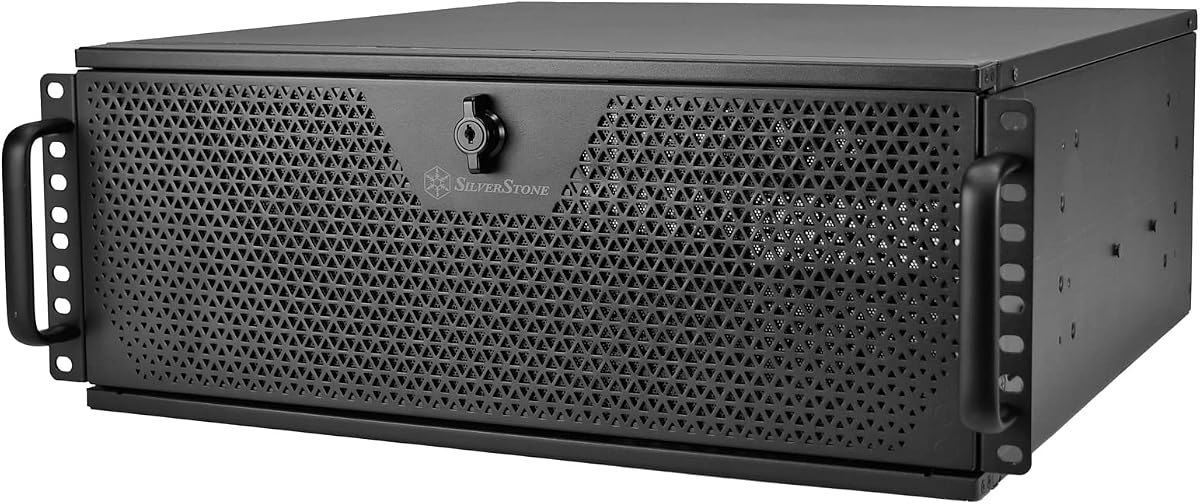
4.3Editor score

5.0Editor score
As an Amazon Associate we earn from qualifying purchases.
The following table provides a side-by-side overview of key specifications for all ten models, allowing you to quickly compare cooling, drive support, and expansion options.


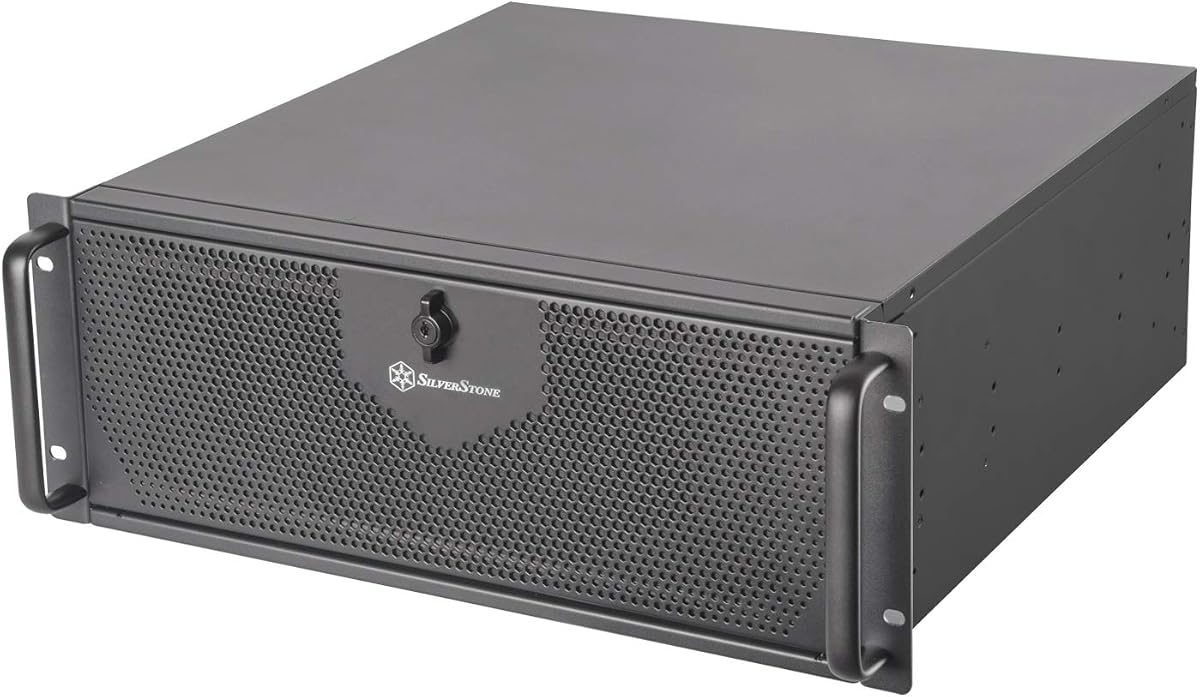
The SilverStone Technology RM44 stands out as a top-tier 4U chassis designed for high-performance servers requiring robust thermal management. With support for up to 360mm liquid cooling radiators, it offers exceptional cooling capabilities for intense workloads. Its rating of 4.3 reflects strong user satisfaction regarding build quality and feature set.
We may earn a commission when you buy through this link, at no additional cost to you.
Key strengths include support for SSI-EEB and Extended ATX motherboards, providing flexibility for various system builds. The inclusion of eight PCIe or PCI expansion slots ensures ample room for multiple GPUs or network cards. Additionally, the USB Type-C interface modernizes connectivity options for quick data transfer and peripheral support.
While the RM44 offers significant advantages, its premium price may not suit budget-conscious projects. The unit is also heavier than standard chassis models, which could complicate installation in tight spaces without proper assistance. However, these trade-offs are acceptable given the superior cooling and expandability it delivers.
Buyers seeking a reliable chassis for demanding server environments with a focus on thermal performance should strongly consider the RM44. It is ideal for organizations needing scalable infrastructure without compromising on cooling efficiency. Overall, it remains a compelling choice for professional deployments.
The ability to fit a 360mm radiator allows for superior heat dissipation compared to air-only solutions.
Incorporating USB Type-C ensures compatibility with modern devices and faster data transfer rates.
We may earn a commission when you buy through this link, at no additional cost to you.
The SilverStone Technology RM4A offers an affordable entry into the 4U rackmount market while still providing high-end cooling features. It supports up to 360mm radiators, making it a rare budget option capable of liquid cooling integration. The rating of 3.6 suggests functional reliability but hints at potential compromises in build or features compared to pricier models.
We may earn a commission when you buy through this link, at no additional cost to you.
Key strengths lie in its cost-effectiveness and ability to support SSI-EEB motherboards. The presence of a USB Type-C interface adds modern utility without increasing the price significantly. It also includes standard features like eight PCI expansion slots and support for hard drive mounting on the expansion card retainer for added storage flexibility.
However, the lower rating indicates users may have experienced issues or found limitations in certain areas. The chassis lacks some advanced features found in the RM44, such as slightly different cooling optimizations. These trade-offs are acceptable for those prioritizing budget over cutting-edge specifications.
For small businesses or individual buyers needing liquid cooling support without breaking the bank, the RM4A is a smart pick. It balances essential high-performance needs with a lower cost structure. Overall, it represents a strong value proposition for budget-limited projects.
Achieving 360mm radiator support at this price point is a significant advantage for budget builds.
Basic but necessary features like rail mounting and USB-C are included to ensure usability.
We may earn a commission when you buy through this link, at no additional cost to you.
The Generic ZhenLoong X412 is a powerhouse designed for data storage and compute-intensive tasks requiring extensive drive bays. It supports 12 hot-swappable drives and includes two 2000W power modules for redundancy. While ratings vary, its configuration offers a rare combination of storage density and power capacity in a 4U form factor.
We may earn a commission when you buy through this link, at no additional cost to you.
Key strengths include the inclusion of 2000W power modules and a 3000W capable power board, ensuring stable power for multiple GPUs or drives. The chassis supports 11 PCI full-height slots, allowing for significant expansion. The build material, medium carbon alloy steel, adds durability and security to the unit.
Potential downsides include a high price point and a long shipping cycle of approximately 30 to 40 days. These factors might delay deployment and increase initial costs for immediate projects. However, for enterprise environments needing massive storage capacity, these delays may be manageable.
Organizations prioritizing storage density and power redundancy should consider the X412 for their server needs. It is tailored for complex setups requiring multiple GPUs and large arrays of hard drives. Overall, it is a specialized solution for demanding infrastructure requirements.
Dual 2000W power modules ensure system uptime even during power component failures.
Support for 12 hot-swappable drives makes this ideal for storage servers or NAS appliances.
We may earn a commission when you buy through this link, at no additional cost to you.
The RackChoice 4U Server chassis is designed specifically for SMBs and data centers requiring reliable storage and expandability. It features 8-Bay hot-swappable SATA/SAS bays allowing for quick drive swaps without downtime. The rating of 4.0 indicates solid performance and ease of use for typical server tasks.
We may earn a commission when you buy through this link, at no additional cost to you.
Key strengths include support for EATX, ATX, MicroATX, and Mini-ITX motherboards, offering significant flexibility. The included MiniSAS to SATA cables simplify installation for users unfamiliar with complex cabling. Additionally, the three 120mm PWM ball bearing fans provide effective cooling to prolong component life.
While the chassis is versatile, it has one fixed 3.5 bay which might limit hot-swap options slightly. Front panel connectivity is standard but may lack modern USB-C ports found in newer models. These are minor trade-offs for a unit focused on core server reliability.
Small businesses needing a straightforward, reliable server chassis should find the RackChoice 4U ideal for their needs. It simplifies deployment with user-friendly tools and cabling included in the package. Overall, it is a practical choice for growing IT environments.
Compatibility with multiple board sizes allows for future upgrades without replacing the chassis.
Included cables and screwless rail options make setup accessible for non-expert technicians.
We may earn a commission when you buy through this link, at no additional cost to you.
The Rosewill 4U Server Chassis is tailored for AI and machine learning tasks requiring robust GPU support. It supports up to four GPUs and offers eight hot-swappable drive bays for efficient storage management. Despite a 3.0 rating, it provides essential features like USB 3.2 Type-C for modern connectivity.
We may earn a commission when you buy through this link, at no additional cost to you.
Key strengths include a pre-installed rail kit which simplifies rack installation significantly. The chassis includes intelligent storage features with SGPIO and temperature control to ensure data management efficiency. The robust cooling system combines front and rear fans to maintain stable operation under heavy workloads.
However, the lower rating suggests potential issues with fan noise or build quality. Specifics on GPU thermal management are less detailed than dedicated AI chassis, which may be a concern for extreme GPU loads. These factors should be weighed against the unit's affordability.
Users looking for a budget-friendly AI-ready chassis with modern ports should consider the Rosewill model. It balances core AI needs with cost-effectiveness effectively. Overall, it serves well for entry-level to mid-tier AI computing projects.
USB 3.2 Type-C ensures high-speed data transfer for modern peripheral and backup devices.
Designed specifically to handle multiple GPUs makes it a strong candidate for AI workloads.
We may earn a commission when you buy through this link, at no additional cost to you.
The Supermicro CSE-747BTQ-R2K04B earns a perfect 5.0 rating for its enterprise-grade build quality and security features. It supports 8x 3.5 SAS/SATA drives with hot-swappable capability and includes a front HDD door lock. The chassis is optimized for four double-width GPUs, making it ideal for high-performance computing.
We may earn a commission when you buy through this link, at no additional cost to you.
Key strengths include 11x full-height expansion slots allowing extensive hardware flexibility. The side panel intrusion switch adds a layer of physical security often missing in standard models. The robust cooling fans ensure stable performance even under heavy computational loads typical in data centers.
While it excels in performance, the premium price may be a barrier for smaller setups. Connectivity is functional but lacks modern USB-C ports found in newer budget models. These trade-offs are acceptable for organizations prioritizing security and reliability over cost.
Enterprise users requiring secure, scalable server infrastructure should strongly consider the Supermicro CSE-747. Its reliability and security features justify the investment for critical workloads. Overall, it stands as a top recommendation for professional server deployments.
Front door locks and intrusion switches protect against unauthorized physical access to drives and components.
Slot layout and cooling are specifically tuned for multiple double-width GPUs to ensure stable performance.
We may earn a commission when you buy through this link, at no additional cost to you.
The Asrock Rack Server Barebone 4U8G-GNR2 is a high-performance solution tailored for Intel Xeon processors and next-gen GPUs. It supports up to eight FHFL PCIe 5.0 x16 GPUs and offers 32x DDR5 DIMM slots for massive memory capacity. The 5.0 rating reflects exceptional design and power efficiency features.
We may earn a commission when you buy through this link, at no additional cost to you.
Key strengths include enhanced airflow designed for reliable cooling of 600W GPUs and accelerator cards. The 2700W redundant power supply ensures high availability for critical systems. With a 80-PLUS Titanium rated power supply, energy efficiency is maximized to reduce operational costs.
However, the high price and barebone nature require users to source additional components like memory and processors. It demands technical expertise to configure fully compared to pre-built systems. These trade-offs are acceptable for users who require maximum customization and control.
Data centers needing maximum memory and GPU support should consider the Asrock Rack 4U8G-GNR2 for their Intel platforms. It offers a scalable foundation for future AI and compute needs. Overall, it is a premium choice for specialized workloads.
Support for PCIe 5.0 ensures readiness for future high-bandwidth accelerator cards.
The 80-PLUS Titanium rating minimizes energy waste during heavy server operation.
We may earn a commission when you buy through this link, at no additional cost to you.
The Asrock Rack Server Barebone 4U8G-N is designed for AMD EPYC processors and high-performance GPU needs. It supports up to eight FHFL PCIe 5.0 x16 GPUs and includes 16 hot-swap NVMe bays for fast storage access. The 5.0 rating indicates strong design quality and thermal management features.
We may earn a commission when you buy through this link, at no additional cost to you.
Key strengths include a 3200W redundant power supply providing immense headroom for compute-heavy workloads. The enhanced airflow design ensures reliable cooling of 600W GPUs and accelerator cards. Support for AMD 3D V-Cache technology allows for optimized performance in specific application scenarios.
The high price and barebone nature require advanced technical knowledge to assemble and configure effectively. This may be challenging for small teams without dedicated IT infrastructure support. However, these trade-offs are manageable for large-scale deployments seeking custom optimization.
Organizations prioritizing AMD EPYC performance and maximum memory should consider the Asrock Rack 4U8G-N for their workloads. It is a powerful platform for AI and scientific computing. Overall, it serves high-end needs effectively.
The 3200W redundant power ensures all GPU and CPU power demands are met reliably.
Enhanced airflow is specifically designed to handle high-temperature GPU and accelerator workloads.
We may earn a commission when you buy through this link, at no additional cost to you.
The Asrock Rack Server Barebone 4U8G-T is a specialized solution for AMD EPYC processors and high-TDP GPUs. It supports up to eight FHFL Dual-Slot PCIe 5.0 x16 GPUs with TDP up to 600W and offers 24x DDR5 DIMM slots. The 5.0 rating reflects robust engineering and power efficiency.
We may earn a commission when you buy through this link, at no additional cost to you.
Key strengths include enhanced airflow to manage heat from powerful accelerator cards effectively. The 2700W Titanium CRPS provides reliable redundancy and efficiency. It supports both NVMe and SATA drive bays offering flexible storage options for varied workload needs.
As with other barebones, the high cost and assembly requirements are considerations for buyers. It is best suited for environments with skilled technicians to handle configuration. These trade-offs are acceptable given the high performance potential it delivers.
Users needing maximum GPU power and memory capacity should consider the Asrock Rack 4U8G-T for their enterprise needs. It is a top-tier option for intensive AI and rendering tasks. Overall, it is a powerful platform for demanding applications.
Support for 600W TDP ensures compatibility with next-generation high-performance GPU accelerators.
The 2700W Titanium CRPS ensures system stability during high-power computational tasks.
We may earn a commission when you buy through this link, at no additional cost to you.
The SilverStone RM42 is a versatile 4U chassis balancing security and thermal performance. It features an anti-theft lock design providing additional security for valuable components. With support for 240mm liquid cooling, it offers solid thermal management. The rating of 4.7 reflects high user satisfaction.
We may earn a commission when you buy through this link, at no additional cost to you.
Key strengths include the inclusion of a USB Type-C interface for modern connectivity. The chassis supports two 5.25 drive bays directly compatible with 3.5 or 2.5 drives. It also includes sliding rail mounting holes for quick and efficient installation in standard racks.
However, the 240mm limit may restrict extreme cooling setups compared to models supporting 360mm radiators. The drive bay options may require additional adapters for specific configurations. These are minor trade-offs for a unit focused on security and compact design.
Buyers needing a secure chassis with flexible drive options should consider the SilverStone RM42 for their needs. It is a reliable choice for professional deployments requiring extra protection. Overall, it remains a strong contender in its class.
The front panel lock adds an essential layer of physical security for sensitive server environments.
Support for 5.25 bays offers adaptability for various drive sizes and legacy hardware.
We may earn a commission when you buy through this link, at no additional cost to you.
Selecting the right chassis involves evaluating multiple factors including thermal management, expansion slots, and compatibility with your specific components.
Thermal performance is critical for GPU servers to prevent throttling and hardware damage. Look for models with high-wattage fans or liquid cooling support to handle heat output from powerful accelerators.
Prioritize chassis with advanced airflow designs and liquid cooling compatibility to maintain stable temperatures under load.
Check the number and type of PCIe slots to ensure they match your GPU and network card needs. Models with full-height or full-length slots accommodate larger enterprise cards effectively.
Verify slot count and type early to avoid compatibility issues during system configuration.
Ensure the chassis supports your motherboard size such as EATX, SSI-EEB, or standard ATX. Compatibility impacts rack mount stability and internal airflow management significantly.
Match motherboard form factors to chassis dimensions for optimal fit and cooling efficiency.
Assess how many drives you need and whether they should be hot-swappable for easy maintenance. Bays for 3.5 or 2.5 drives provide flexibility for various storage solutions and NVMe options.
Choose hot-swap bays for easy maintenance without system downtime or hardware disruption.
GPU servers often need high-wattage redundant power supplies to prevent failures. Ensure the chassis supports CRPS or ATX units matching your expected power consumption levels.
Select power options that match your system demand to guarantee stable operation.
Physical security matters in shared rack environments to prevent unauthorized access. Look for chassis with lockable panels or intrusion switches that alert on tampering attempts.
Prioritize lockable panels and switches to protect sensitive hardware and data physically.
If you plan to use liquid cooling check the radiator size support the chassis allows. Models varying from 240mm to 360mm support dictate your thermal strategy significantly.
Confirm radiator support dimensions match your chosen cooling solution for effective heat dissipation.
Ease of installation can save significant time during deployment. Models with tool-less rails or pre-installed kits simplify setup in crowded racks.
Look for tool-less features and included rails to streamline the installation process.
Install the chassis in a climate-controlled rack to avoid overheating from environmental exposure. Ensure cables are organized internally to prevent airflow blockage and component stress.
Regularly clean dust filters and check fan operation to maintain cooling efficiency. Replace failing fans promptly to avoid heat buildup that could shorten component lifespan.
Monitor system temperatures using BIOS or software tools to catch potential issues early. Keep firmware updated for all connected components to optimize thermal management features.
A 4U chassis provides more vertical space than 1U or 2U models allowing for better cooling and larger component support. It typically fits up to 4U standard dimensions making it ideal for GPU servers requiring room for heat dissipation and expansion cards. This size is widely used for high-performance computing needs.
Yes, most 4U chassis support standard ATX motherboards in addition to larger formats like EATX or SSI-EEB. Always check the manufacturer specifications to confirm compatibility. This flexibility helps future-proof your builds and simplify upgrades.
Many modern 4U chassis support liquid cooling radiators ranging from 240mm to 360mm. This feature is essential for managing heat from high-end GPUs effectively. Verify radiator size limits before purchasing your preferred cooling solution.
Hot-swap drive bays allow you to replace drives without powering down the server. This minimizes downtime during maintenance and helps ensure continuous data availability. It is a critical feature for reliable server operations.
Redundant power supplies provide backup in case one power unit fails which is crucial for critical workloads. They prevent sudden shutdowns and potential data loss during peak GPU usage. Consider them essential for enterprise stability.
Use zip ties and cable routing channels to secure cables and prevent airflow obstruction. Proper cable management ensures fans are not blocked reducing the risk of overheating. This also simplifies troubleshooting and maintenance tasks.
A 4U chassis can last five to ten years depending on usage and environmental conditions. Proper maintenance like regular cleaning extends component longevity. Choose durable materials to maximize overall build durability.
Newer models increasingly include USB Type-C for modern connectivity and faster data transfer. However not all 4U chassis have this feature yet so check specifications carefully. It enhances peripheral support and convenience significantly.
Selecting the ideal 4U Rackmount GPU Server Chassis depends heavily on your specific needs including thermal requirements and expansion goals. The top picks offer diverse options ranging from budget-friendly models to high-end enterprise solutions.
Prioritize thermal management and motherboard compatibility to ensure long-term reliability. Always verify that the chassis supports your GPUs and drives properly before finalizing your purchase decision.
Remember to check current prices and availability as stock may vary across regions. This guide aims to simplify your search and help you find the most suitable solution for your infrastructure needs.