
HiLetgo 5pcs DHT11
4.5Editor score
Low cost digital sensor
Simple single wire interface
Includes five modules and wires
This guide compares the top Arduino temperature sensors for accuracy, waterproofing, and ease of use to help you pick the right module for your project.
Choosing the right Arduino temperature sensor is crucial for any project involving environmental monitoring or thermal control. You need reliability and accuracy to ensure your data is trustworthy over long periods.
We compared ten popular models based on their specifications, user feedback, and integration ease. This list covers digital and analog options suitable for beginners and advanced makers alike.
Each pick shows key strengths and limitations so you can decide quickly. Note that prices and availability change frequently on marketplaces so check current listings before buying.
4.5Editor score

4.9Editor score

4.7Editor score
The following table provides a side by side view of all ten products. It highlights key specifications to help you compare features at a glance.


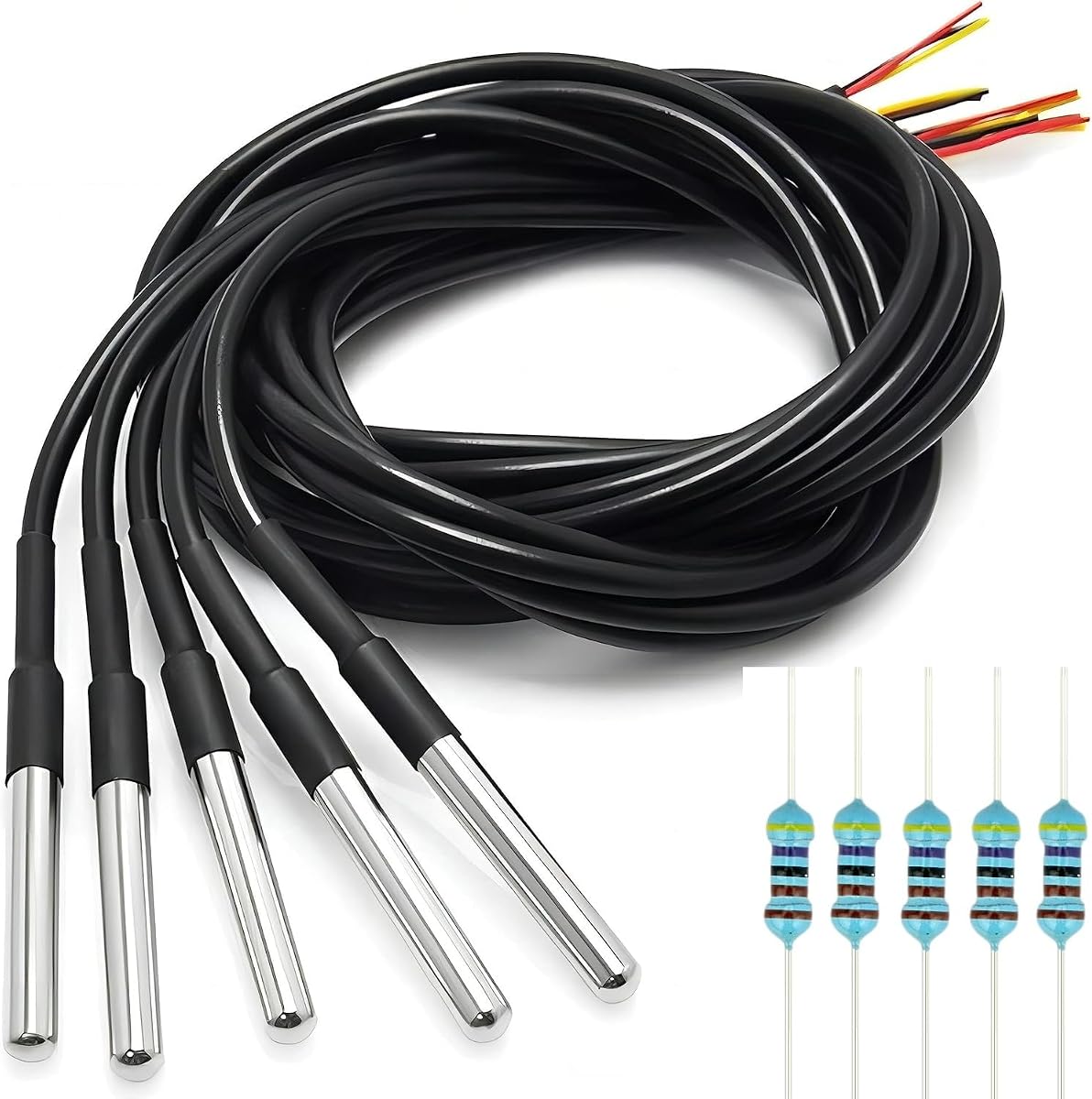


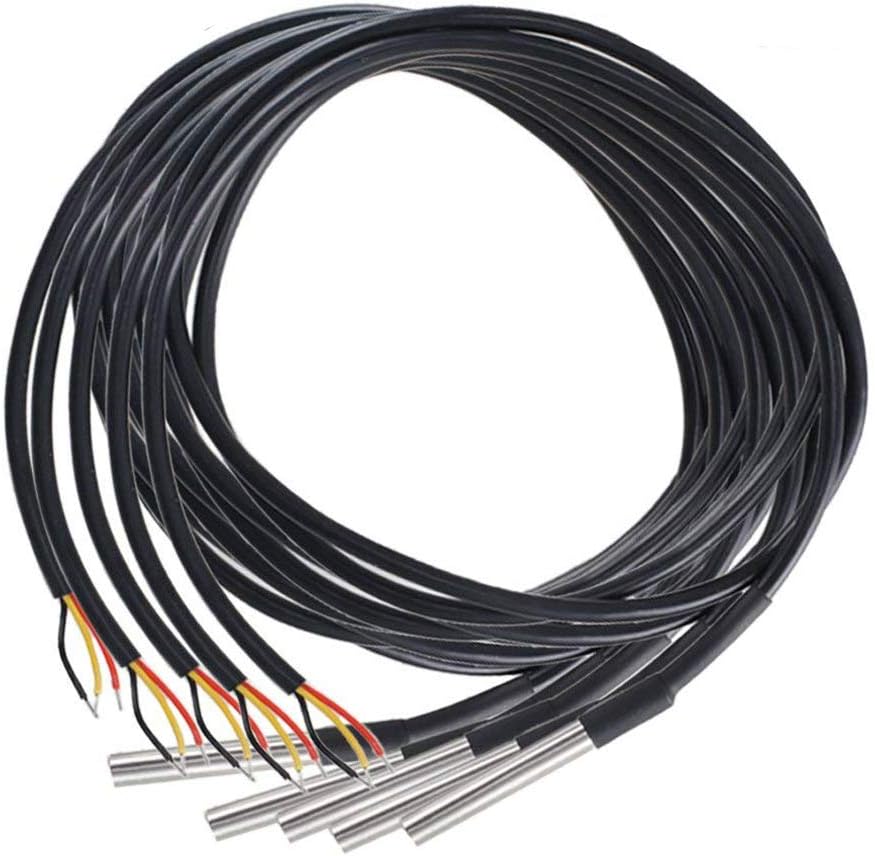
This kit stands out as the top choice for makers needing reliable temperature monitoring. It features a robust waterproof probe and includes all necessary components for immediate use.
We may earn a commission when you buy through this link, at no additional cost to you.
The stainless steel probe ensures durability in wet environments while the accuracy remains high across a wide temperature span. This makes it suitable for industrial or outdoor applications.
While it costs more than basic sensors the included accessories save time and reduce the need for extra parts. The adapter board simplifies wiring significantly.
Choose this if you need accuracy and durability without worrying about component sourcing. It is an excellent investment for serious projects.
The stainless steel casing protects the sensor from corrosion and physical damage ensuring longevity.
Includes jumper wires and resistors so you can start building your circuit immediately.
We may earn a commission when you buy through this link, at no additional cost to you.
This option offers incredible value for those just starting with environmental sensing. You get five modules which is rare at this price point.
We may earn a commission when you buy through this link, at no additional cost to you.
The single wire interface reduces wiring complexity and the digital output makes reading data straightforward. It is perfect for indoor climate monitoring.
Accuracy is not as high as premium models but for general projects it is sufficient. The limited range means it is not for extreme heat or cold.
Pick this if you need multiple sensors for different locations or want to test ideas without spending much. It is a great starter pack.
Buying five sensors at once allows you to cover multiple zones in your project.
The protocol is easy to implement in code without complex libraries.
We may earn a commission when you buy through this link, at no additional cost to you.
This module delivers professional grade accuracy for projects demanding precise data. The I2C interface allows easy connection to multiple devices on the same bus.
We may earn a commission when you buy through this link, at no additional cost to you.
Its wide voltage range and temperature span make it versatile for various environments. The stability ensures consistent results over time.
It is more expensive than basic options but the performance justifies the price for critical applications. Ensure you have available I2C pins.
Use this when precision is paramount and you need reliable long term stability. It is ideal for scientific or industrial prototypes.
Achieves accuracy within 0.3C which is excellent for detailed monitoring needs.
Operates from 2.4V to 5.5V accommodating different board power standards.
We may earn a commission when you buy through this link, at no additional cost to you.
This set offers a solid balance of price and performance with a waterproof probe. The one meter cable provides decent reach for most setups.
We may earn a commission when you buy through this link, at no additional cost to you.
The adapter module simplifies wiring to your microcontroller making it accessible for beginners. It is widely used in tanks and greenhouses.
While not the most accurate it is reliable for general monitoring tasks. Ensure you use the correct resistor for stable communication.
Select this if you need waterproofing and a bit of reach without high costs. It is a practical choice for hobbyist applications.
The one meter cable allows placing the sensor away from the control board.
The built in resistor helps simplify the connection process.
We may earn a commission when you buy through this link, at no additional cost to you.
This kit provides five sensors and resistors which is a generous offering. The stainless steel construction ensures durability in wet environments.
We may earn a commission when you buy through this link, at no additional cost to you.
Accuracy is high for the price range and compatibility spans many popular boards. It reduces the need to source extra components separately.
The lack of specific cable length details might be a downside for some but the value is strong. The resistors ensure proper bus operation.
Choose this if you need multiple sensors and want a complete solution. It is a smart buy for expanding your project scope.
The inclusion of resistors saves you a trip to the electronics store.
Works seamlessly with Arduino Raspberry Pi and ESP32 boards.
We may earn a commission when you buy through this link, at no additional cost to you.
This sensor is a straightforward choice for basic indoor monitoring. It comes with wires to facilitate quick setup.
We may earn a commission when you buy through this link, at no additional cost to you.
It provides both temperature and humidity data using a single digital signal. The reliability is good for casual projects.
The humidity accuracy is lower than dedicated sensors and the temperature range is restricted. It is not suitable for harsh conditions.
Pick this for simple home automation projects. It is cost effective and easy to integrate into existing setups.
The included wires reduce setup time significantly.
Simplifies wiring by reducing the number of connections needed.
We may earn a commission when you buy through this link, at no additional cost to you.
This unit is known for its durability in demanding conditions. The stainless steel probe resists rust and corrosion effectively.
We may earn a commission when you buy through this link, at no additional cost to you.
It covers a broad temperature range making it versatile for many uses. The kit includes all necessary wires for connection.
While it is slightly bulkier than chip based sensors the robustness is beneficial for physical environments. The readings remain stable.
Choose this if you need reliability in a wet or rough setting. It is a strong choice for outdoor monitoring.
The steel casing prevents rust ensuring long term functionality.
Operates reliably from freezing cold to high heat.
We may earn a commission when you buy through this link, at no additional cost to you.
This pack offers five waterproof probes with one meter cables for extensive reach. It is a practical solution for larger areas.
We may earn a commission when you buy through this link, at no additional cost to you.
The thermal probes are durable and waterproof ensuring they withstand moisture. It works with most microcontrollers directly.
It lacks adapter boards which means more wiring work but the cost is lower. The quantity is great for distributed projects.
Select this if you need to cover multiple large spaces. It is a solid choice for expanding your sensor network.
The one meter wires allow flexible placement of sensors.
Five units allow monitoring different zones efficiently.
We may earn a commission when you buy through this link, at no additional cost to you.
This sensor offers an upgrade over the basic DHT11 with better accuracy. It provides both temperature and humidity readings digitally.
We may earn a commission when you buy through this link, at no additional cost to you.
The wider temperature range and improved humidity accuracy make it more versatile. It mounts easily with screw holes.
The data rate is slower which limits use in high speed applications. For general monitoring it is sufficient and reliable.
Choose this if you need better precision than basic sensors. It is a great balance of cost and performance.
Offers 0.5C accuracy compared to 2C for standard models.
Provides both temperature and humidity data in one unit.
We may earn a commission when you buy through this link, at no additional cost to you.
This kit delivers five waterproof probes with stainless steel protection. The one meter cables provide ample reach for diverse setups.
We may earn a commission when you buy through this link, at no additional cost to you.
Accuracy is high and the digital output simplifies data reading. It is widely used for industrial and DIY projects.
You will need to provide a pull up resistor which adds a small step. It is straightforward and effective for many users.
Pick this if you need multiple durable sensors for a project. It offers great value for its quality and quantity.
Ensures resistance to corrosion and physical wear.
Delivers precise readings suitable for technical applications.
We may earn a commission when you buy through this link, at no additional cost to you.
Selecting the right sensor depends on your specific needs and project constraints. Here are key factors to consider.
Accuracy determines how close your readings are to the true value. Higher accuracy is vital for scientific or industrial uses where margins of error matter.
Look for sensors with lower tolerance values such as 0.3C to ensure reliable data.
Different sensors support different temperature ranges. Some are limited to 0 to 50C while others handle -55 to 125C.
Choose a model that covers your expected operating environment to avoid damage or inaccurate readings.
Sensors communicate via protocols like one wire I2C or digital bus. Each has different wiring and code requirements.
I2C supports multiple devices easily while one wire is simpler for single point monitoring.
If you need to measure in liquids or humid places a waterproof probe is essential. Stainless steel casing helps resist corrosion.
Ensure the rating matches your environment to protect the electronics inside.
Check the voltage range supported by the sensor. Most work on 3 to 5V but some are more flexible.
Matching your board's power output prevents damage and ensures stable operation.
Some kits include resistors wires and adapters which simplifies setup. Others require separate purchases.
Complete kits save time and reduce the risk of missing parts during assembly.
Price varies by quality and quantity. Buying in packs often reduces the per unit cost significantly.
Balance your budget with the number of sensors you need to deploy effectively.
Some modules have built in resistors or headers for direct connection. This reduces soldering needs.
Look for screw holes or mounting points to secure the sensor in place.
Start by connecting the power and ground pins to your microcontroller. Then connect the data pin to a digital IO port.
Install the appropriate library in your IDE to simplify code and reduce errors. Verify the library matches the sensor model exactly.
Test the sensor by reading raw data before integrating into a full program. Check the temperature readings against known values for validation.
For indoor monitoring the DHT11 or DHT22 are ideal due to their cost and simplicity. They provide adequate accuracy for home temperature and humidity tracking.
Only waterproof probes like the DS18B20 with stainless steel casing are suitable for water. Ensure the model specifically states waterproof capabilities.
Yes one wire sensors typically require a 4.7K ohm pull up resistor between data and power for stable communication.
Accuracy varies from 2C for basic models to 0.3C for premium ones. Choose based on how precise your application requires the data to be.
The SHT31 and AHT30 models use I2C which allows multiple sensors on the same data lines easily.
Many modules come with screw holes for secure mounting. Use heat shrink tubing on wires to protect connections from environmental factors.
Yes you can connect multiple sensors by using unique addresses or different digital pins. One wire sensors can be chained on the same data line.
With proper care most sensors last several years. Humidity and extreme temperatures may reduce lifespan so keep them within rated limits.
This guide reviewed ten top sensors ranging from budget options to precision modules. Each offers unique strengths for different project needs.
Prioritize accuracy and waterproofing if your project demands reliability. Otherwise simple digital sensors save cost and time.
Always check current prices and availability since they change often. Select the model that fits your specific use case best.