
Nano V3.0 Board
4.6Editor score
CH340G USB driver
ATmega328P microcontroller
3 Pack with cables
Compare the top Arduino Nano Board models for 2026 including classic and new versions to find the perfect microcontroller for your projects.
The Arduino Nano Board remains a cornerstone for makers and engineers needing a compact microcontroller. It offers powerful performance in a small form factor ideal for space constrained projects. Choosing the right version depends on your specific needs like wireless connectivity or memory size.
We compared ten leading Arduino Nano Board options available today. Our analysis covers compatibility features and ease of use. Each pick highlights distinct strengths for different project types from simple sensors to complex IoT systems.
Each pick shows key specs and real world strengths to help you decide. Prices fluctuate frequently so check current listings before buying. This guide ensures you find the exact board that fits your technical requirements and budget.
4.6Editor score
4.6Editor score

4.6Editor score
This table compares all ten top Arduino Nano Board choices side by side. You can quickly see the microcontroller type connectivity options and pin counts to find the best fit for your project.


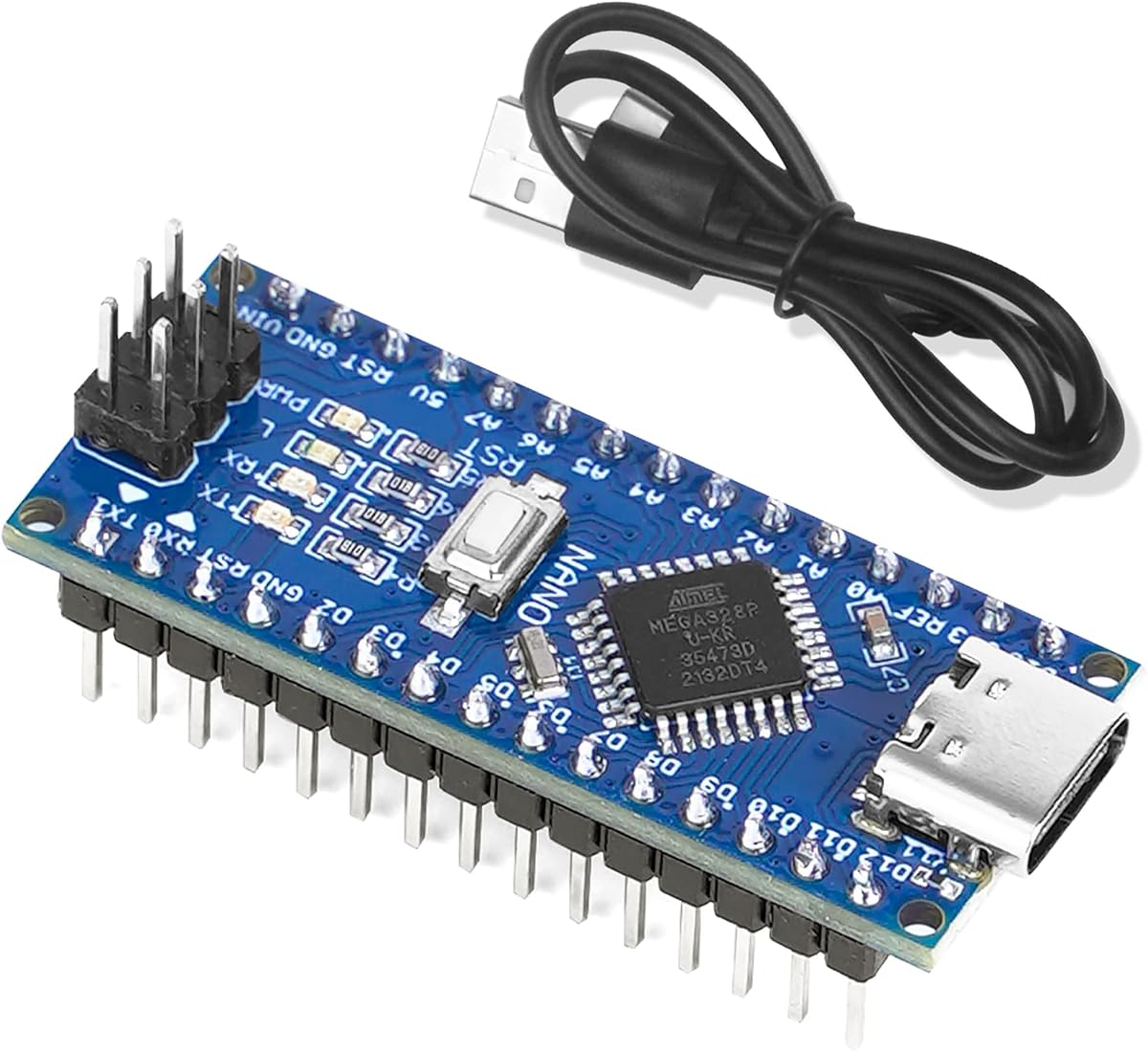
This Nano V3.0 board is a top budget choice rated highly by users. It offers three identical boards with cables for multi project setups. The ATmega328P chip ensures standard Arduino performance at a low cost.
We may earn a commission when you buy through this link, at no additional cost to you.
The CH340G USB chip replaces older drivers making setup easier on modern systems. Each board has full I/O for LEDs sensors and motors. You get reliable performance without paying for premium branding.
Trade offs include third party manufacturing which may vary slightly between boards. There is no Wi-Fi or Bluetooth built in. However these boards work perfectly for wired projects and beginners.
Students and hobbyists should buy this for prototyping many sensors. The three pack saves money on large batch projects. It remains a trusted choice for classic Arduino Nano needs.
Getting three boards allows you to test multiple circuits simultaneously. This reduces cost per unit significantly for classroom or home lab use.
The CH340G chip is widely supported across operating systems. You avoid common driver conflicts associated with older USB serial chips.
We may earn a commission when you buy through this link, at no additional cost to you.
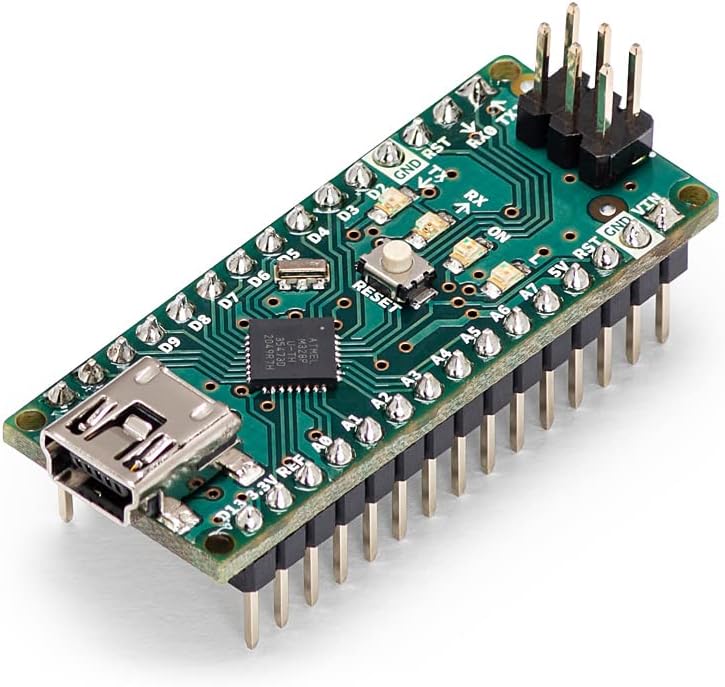
The official Arduino Nano carries a trusted reputation and high user ratings. It is the gold standard for classic microcontroller projects. Its compact design fits seamlessly into wearables and small electronics.
We may earn a commission when you buy through this link, at no additional cost to you.
Built with an ATmega328P it supports 22 digital I/O pins and 8 analog inputs. The official IDE ensures smooth code upload and library use. This reliability is crucial for professional and educational work.
Higher cost compared to clones is the main trade off. The Mini USB port is less convenient than modern Type-C. However the quality assurance often justifies the extra investment.
Professionals and schools should buy this for guaranteed stability. It simplifies troubleshooting since the community knows it best. For core projects where quality matters this remains the top pick.
Using an official board ensures compliance with specs. You avoid subtle hardware variances found in third party clones.
Most tutorials assume the official pinout and features. This reduces confusion during learning and project implementation.
We may earn a commission when you buy through this link, at no additional cost to you.
This Nano ESP32 offers premium features with wireless connectivity and Python support. Rated highly it bridges the gap between classic Arduino and IoT. The ESP32-S3 handles complex tasks efficiently.
We may earn a commission when you buy through this link, at no additional cost to you.
It supports Wi-Fi and Bluetooth 5.0 for smart home projects. MicroPython compatibility lowers the learning curve. The USB-C port ensures fast charging and data transfer.
Trade offs include higher power draw and needing wireless config skills. It is overkill for simple blink tests. However modern developers will find its capabilities unmatched.
IoT builders and advanced hobbyists should buy this for connected devices. It future proofs your projects with wireless options. For any project needing internet this is the definitive choice.
Built-in Wi-Fi removes the need for add-on shields. This simplifies circuit design for remote sensor nodes.
MicroPython support makes coding accessible to non C programmers. This accelerates prototyping for rapid idea validation.
We may earn a commission when you buy through this link, at no additional cost to you.
The Arduino Nano Every uses the newer ATmega4809 for better efficiency. It keeps the classic form factor but adds modern power management. The 48KB flash supports larger sketches easily.
We may earn a commission when you buy through this link, at no additional cost to you.
USB-C integration simplifies cabling for new users. It retains compatibility with existing shields for smooth transitions. Performance is noticeably snappier than the older ATmega328P.
It lacks wireless capabilities built-in for IoT use. Some old libraries may need minor adjustments. But for pure embedded logic it is a robust upgrade.
Engineers needing modern power specs should buy this. It bridges the gap between classic and newer boards. Perfect for upgrades needing more memory without changing size.
The ATmega4809 runs cooler and uses less power. This extends battery life in portable applications.
You can use existing Arduino sketches with minimal changes. This reduces migration effort for legacy projects.
We may earn a commission when you buy through this link, at no additional cost to you.
ELEGOO offers these boards ready to use out of the box. The pre-soldered headers save significant assembly time. Users rate them highly for beginner friendliness and quality.
We may earn a commission when you buy through this link, at no additional cost to you.
Each set includes USB-C cables for modern connection needs. The ATmega328P keeps it standard while the headers save space. This makes prototyping faster than traditional kits.
Trade offs include standard MCU limits compared to ESP32. You get three boards but no advanced sensors. Still it is perfect for general learning and testing.
Beginners needing quick start should buy this set. You avoid soldering issues while learning coding. It is ideal for school projects and rapid prototypes.
Pre-soldered headers let you plug directly into breadboards. This reduces tool requirements for home makers.
Having three boards lets you distribute across projects. This avoids downtime when one board is busy.
We may earn a commission when you buy through this link, at no additional cost to you.
This dual pack offers a great entry price for Arduino projects. Users appreciate the USB-C update on these V3.0 boards. It is efficient for testing circuits without bulk spending.
We may earn a commission when you buy through this link, at no additional cost to you.
CH340G chips ensure compatibility with modern OS systems. The included cables save time finding connections. Performance matches standard requirements for basic I/O tasks.
Trade offs include third party reliability concerns. There are no advanced features like Wi-Fi. For basic tasks it remains highly competitive and functional.
Hobbyists needing spare boards should buy this. You get a backup without doubling the price. It is perfect for experimentation and classroom spares.
Having two boards helps test code and hardware separately. This speeds up debugging and iteration cycles.
Replacing Mini USB with Type-C matches modern cables. This simplifies connectivity for new users.
We may earn a commission when you buy through this link, at no additional cost to you.
This three pack provides plenty of boards for larger workshops. The USB-C port ensures future proofing. Users note good performance for price in this value set.
We may earn a commission when you buy through this link, at no additional cost to you.
ATmega328P chips offer standard Arduino performance. Power switching handles external power automatically. This reduces wiring complexity for portable setups.
Trade offs include limited RAM and flash compared to newer models. No wireless features are present. But it covers essential needs for many DIY tasks.
Teachers and groups should buy this for workshops. You get enough units for simultaneous student testing. It is a reliable workhorse for general electronics.
The board switches between USB and external power automatically. This prevents power conflicts during development.
Three boards cover multiple students efficiently. This reduces cost per learner for educational sets.
We may earn a commission when you buy through this link, at no additional cost to you.
The Nano R4 introduces a powerful Renesas chip and new connectors. The RGB LED helps visualize status during coding. Users find it great for advanced embedded tasks.
We may earn a commission when you buy through this link, at no additional cost to you.
Qwiic connectors simplify sensor integration without soldering. The clock speed ensures rapid processing for data. This makes it suitable for complex control logic.
Trade offs include learning a new IDE nuance. It lacks native Wi-Fi compared to ESP32. For wired precision work it is exceptional.
Advanced engineers should buy this for complex systems. The memory and speed handle heavy loads well. It is perfect for industrial prototypes needing reliability.
I2C devices plug in easily without wires. This speeds up sensor prototyping significantly.
Programmable RGB LED provides system feedback instantly. This aids debugging without extra hardware.
We may earn a commission when you buy through this link, at no additional cost to you.
This version allows custom integration for product design. Users with soldering skills can solder headers themselves. The castellated edges enable direct mounting on custom PCBs.
We may earn a commission when you buy through this link, at no additional cost to you.
It retains the Qwiic and RGB features of the R4. The Renesas chip delivers high processing power. This flexibility suits professional manufacturing or unique builds.
Trade offs include needing assembly skills to use fully. Beginners may find loose pins difficult to handle. But for custom hardware this is essential.
Manufacturers and custom builders should buy this. You control the final hardware layout exactly. It bridges the gap to mass production easily.
Castellated edges allow direct soldering to boards. This creates compact final products without headers.
Soldering headers yourself ensures mechanical stability. This is ideal for vibrating or high stress environments.
We may earn a commission when you buy through this link, at no additional cost to you.
This single Nano module is perfect for one-off projects. Users find it easy to integrate into custom electronics. The OSOYOO brand offers consistent performance.
We may earn a commission when you buy through this link, at no additional cost to you.
USB-C ensures modern connectivity and power needs. It supports standard IDE uploads without issues. Compact size fits tight spaces in gadgets.
Trade offs include lack of multi-pack pricing. You need to source your own header pins. For small projects it is efficient and affordable.
Repair techs and solo makers should buy this. It fits into existing enclosures easily. Ideal for replacing old boards or custom integrations.
Works as a direct drop-in for older boards. This extends device life without full system rebuild.
The module design reduces space usage on PCBs. This is vital for wearable electronics.
We may earn a commission when you buy through this link, at no additional cost to you.
Selecting the right Arduino Nano Board requires understanding your project needs. We analyze key factors to help you decide confidently.
Choose between ATmega328P for standard use or ESP32-S3 for wireless. Newer models like ATmega4809 offer better efficiency. This defines processing speed and memory limits.
Match the chip to your code complexity needs.
USB-C is preferred for modern power and data. Mini USB is older but still common. Check your available cables before purchasing.
Opt for USB-C for future compatibility.
Determine if Wi-Fi or Bluetooth is required. Some models have these built-in while others do not. This affects your choice heavily for IoT.
Select wireless models for remote monitoring.
Flash and SRAM define how much code fits. Larger memory handles complex algorithms better. Check specs for your library requirements.
Prioritize RAM for data heavy tasks.
Verify digital and analog pin availability. More pins support more sensors directly. Some models reduce counts for specific features.
Ensure enough pins for your sensors.
Official Arduino boards offer consistency and support. Third party brands are cheaper but vary. Choose based on your tolerance for variance.
Official brands suit professional reliability needs.
Three packs reduce unit cost significantly. Single units are easier for one-off tests. Compare total cost including cables.
Multi packs save money long term.
Check if the board needs external power. USB power suffices for low current projects. Some models switch power sources automatically.
Auto switching simplifies portable projects.
Connect the USB cable to your computer and install drivers if needed. Open Arduino IDE and select the correct board type under Tools. Upload your code to verify functionality.
Protect your board from moisture and dust during use. Store unused boards in anti-static bags to prevent damage. Handle pins carefully to avoid bending them.
Use external power for high current loads like motors. Avoid shorting pins to prevent damage to the MCU. Always verify your code before running to save battery.
The Nano Every uses a newer ATmega4809 chip offering better efficiency and more memory. It supports USB-C while original models often use Mini USB. Both remain compatible with Arduino IDE but every handles complex code better.
Windows often auto installs CH340 drivers automatically on modern versions. You may need to download the installer manually if the COM port does not appear. Mac and Linux usually support it natively.
Yes you can use models with built-in Wi-Fi and Bluetooth. Standard models require add-on shields for wireless. Check connectivity needs before choosing to save time.
The board provides roughly 500mA from USB safely. High draw components like motors need external power. Always use modules to protect the microcontroller from damage.
The official Nano or a pre-soldered clone kit is ideal. They offer standard pinouts and massive community support. USB-C kits help avoid cable compatibility issues.
Yes some boards come without headers for custom mounting. You will need a soldering iron and patience. Check the specs to ensure headers are not pre-installed.
USB-C allows higher power delivery and reversible connection. It reduces cable clutter and wear on the port. It is highly recommended for new projects.
Standard models do not natively support MicroPython. Models like Nano ESP32 do offer this feature. Check firmware compatibility if Python is required.
We reviewed ten top Arduino Nano Board options ranging from budget packs to advanced models. The official Nano remains the gold standard for reliability while the ESP32 offers wireless power.
Prioritize connectivity and memory based on your specific project goals. For beginners standard models work best while advanced engineers will prefer R4 or ESP32 features.
Always check current prices before purchasing as they fluctuate. Your choice should align with long term needs and skill level.