
Entina Tina2C
4.4Editor score
Fast 8 minute start
AI powered STEM modules
Safe quiet operation
This guide compares the top 3D printers for educational use, highlighting safety, ease of use, and STEM features for students and classrooms.
Finding the right 3D printer for educational use requires balancing safety, ease of use, and learning potential. These machines help students visualize concepts, build prototypes, and develop critical thinking skills in a hands-on environment that inspires creativity and innovation daily.
We compared ten leading models based on setup time, safety certifications, print quality, and educational software integration. Our analysis focuses on devices that minimize technical hurdles so educators and students can focus on design and learning rather than troubleshooting complex mechanical issues or software conflicts.
Each pick below highlights unique strengths for different classroom needs, from compact desktop units to high-speed professional tools. Prices and availability change frequently, so verify current details before purchasing to ensure you get the best value and support for your specific educational program or home lab.
4.4Editor score

4.6Editor score

4.5Editor score
The following comparison table lists key specifications for all ten models to help you quickly identify which machine matches your classroom space, budget, and curriculum goals without needing deep technical knowledge or extensive research time.





The Ugee Funbox stands out as a premier choice for educational settings due to its robust safety features and intuitive design. It holds a strong rating for ease of use, making it ideal for younger students or classrooms where technical supervision is limited during independent project work.
We may earn a commission when you buy through this link, at no additional cost to you.
Its enclosed body with anti-pinch doors and HEPA filtration ensures a safe environment for children. The included library of over 12,000 pre-curated models allows students to start printing immediately without needing advanced CAD skills, fostering engagement and rapid learning cycles in STEM activities.
While it focuses on single-color PLA, the AI tools compensate by turning photos into printables, encouraging creativity. The speed is impressive for a kid-focused device, minimizing wait times and keeping momentum high during lesson plans or after school club sessions.
Educators looking for a turnkey solution will find this model compelling. The combination of safety certifications, ready-to-print assets, and minimal setup effort makes it a reliable partner for integrating additive manufacturing into diverse curricula with minimal friction.
The fully enclosed structure with cool-touch exterior protects students from hot surfaces and moving parts while maintaining air quality with advanced filtration systems.
Students can generate models from text or images using built-in AI, lowering the barrier to entry for complex design concepts without needing prior 3D modeling experience.
We may earn a commission when you buy through this link, at no additional cost to you.
The Entina Tina2C is an excellent entry point for schools or homes with tight budgets. It offers a compact footprint suitable for desks, with a rating that reflects its simplicity and reliability for beginners new to additive manufacturing concepts.
We may earn a commission when you buy through this link, at no additional cost to you.
With over 3,000 models available via its app and 20+ DIY modules, students can engage immediately with curriculum-aligned projects. The auto-leveling and power-loss recovery features reduce failed prints, ensuring students spend more time creating and less time troubleshooting mechanical issues.
The small build volume limits large projects, but it is perfect for quick prototypes and classroom demonstrations. Its quiet operation and simple controls make it a stress-free addition to learning environments where noise levels and complexity are concerns.
For educators seeking a low-risk introduction to 3D printing, this machine delivers strong value. It balances cost with essential features like WiFi control and guided lessons, making it a practical tool for inspiring young inventors without requiring extensive technical support.
The included STEM modules and model library provide structured learning paths that align with educational standards, helping teachers integrate 3D printing into existing lesson plans effectively.
Remote monitoring and control via smartphone apps allow teachers to manage prints from their desks, enhancing oversight without interrupting class flow or requiring constant physical presence.
We may earn a commission when you buy through this link, at no additional cost to you.
The Snapmaker U1 represents the pinnacle of educational 3D printing capabilities, offering professional-grade features like multi-toolheads and rapid tool changes. Its rating reflects high reliability for advanced projects that demand multi-material or multi-color results in a single print.
We may earn a commission when you buy through this link, at no additional cost to you.
This printer excels in advanced engineering and design curricula where students need to experiment with different materials simultaneously. The automatic tool changer minimizes waste and downtime, allowing for complex prototypes that would be impossible with single-nozzle machines in a classroom setting.
However, its cost and complexity may be prohibitive for general education. It is best suited for specialized makerspaces or higher-level courses where the added functionality justifies the investment and technical overhead required for setup and maintenance of multiple toolheads.
For schools with significant budgets and technical staff, this model unlocks endless possibilities. It empowers students to tackle sophisticated challenges, bridging the gap between hobbyist printing and industrial manufacturing processes in an educational context.
The ability to switch between rigid and flexible materials on the fly allows students to create functional parts with moving components, enhancing practical understanding of material properties.
By swapping toolheads instead of purging filaments, the machine significantly reduces material waste, teaching students the importance of efficiency and resource management in engineering.
We may earn a commission when you buy through this link, at no additional cost to you.
The Bambu Lab A1 offers exceptional precision and speed, making it suitable for detailed educational projects. It holds a high rating for reliability, ensuring that even novice users can achieve professional results without extensive manual tuning or adjustment.
We may earn a commission when you buy through this link, at no additional cost to you.
Its fully auto calibration removes technical barriers, allowing students to focus on design. The quiet operation and user-friendly touchscreen make it friendly for classroom use, ensuring the machine does not disturb learning environments during intensive printing sessions.
While the open frame limits certain materials, it remains highly effective for PLA and PETG. Students appreciate the speed which means faster iterations and more opportunities to learn from mistakes during a single class period or project phase.
Educators prioritizing quality and ease of use will find this model compelling. It strikes a balance between performance and simplicity, making advanced engineering concepts accessible without overwhelming users with complex setup procedures.
High acceleration speeds allow students to test multiple design variations quickly, fostering an agile learning environment where feedback loops are short and educational value is high.
Active noise cancellation keeps the printer quiet, preventing disruptions during lectures or exams, which is critical for maintaining a focused classroom atmosphere.
We may earn a commission when you buy through this link, at no additional cost to you.
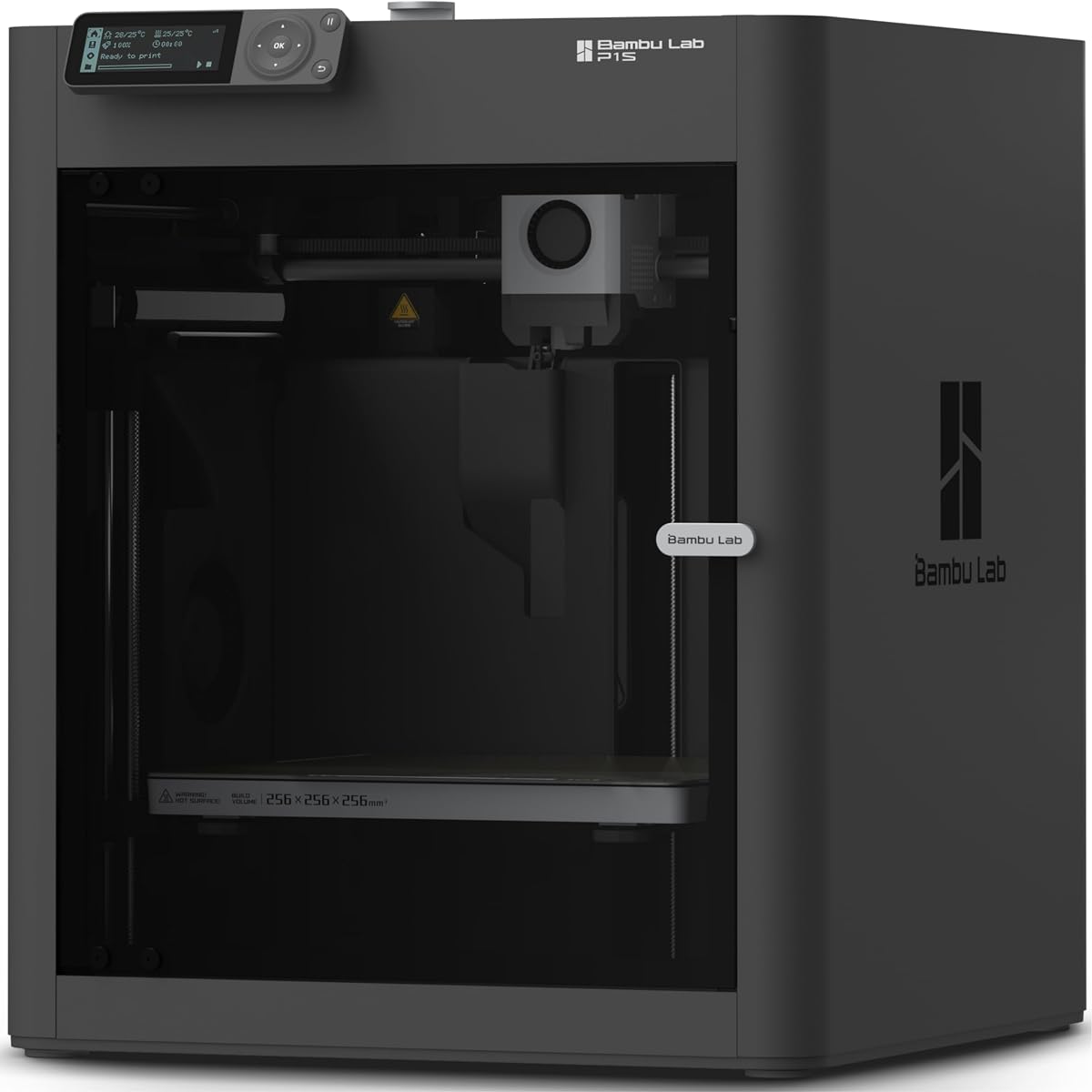
The Bambu Lab P1S combines speed with a fully enclosed design, addressing safety concerns in schools. Its rating reflects a robust build that handles advanced filaments, providing a more controlled environment for experiments requiring higher temperatures or complex materials.
We may earn a commission when you buy through this link, at no additional cost to you.
Enclosed chambers prevent drafts and keep heat stable, essential for consistent prints. Multi-color capabilities allow for visually striking projects that engage students visually and conceptually, encouraging deeper exploration of color theory and design in their coursework.
Setup is quick and automated, ensuring minimal downtime between classes. While the price is higher, the reliability and versatility make it a valuable long-term asset for institutions aiming to upgrade their manufacturing labs with future-proof technology.
For educators needing a versatile machine that balances safety and performance, the P1S is ideal. It supports a wide range of engineering materials while maintaining the ease of use necessary for a classroom setting.
The enclosure supports high-performance materials like ASA, opening doors to outdoor or industrial applications that expand the scope of student projects beyond standard plastics.
Multi-color printing capabilities help students create prototypes that closely resemble final products, improving their ability to communicate design ideas and get meaningful feedback.
We may earn a commission when you buy through this link, at no additional cost to you.
The Adventurer 5M focuses on speed, delivering high-speed printing that accelerates project completion. Its CoreXY structure provides stability, ensuring that even at high speeds, prints remain accurate for classroom needs requiring rapid prototyping.
We may earn a commission when you buy through this link, at no additional cost to you.
The quick nozzle change and auto leveling reduce maintenance downtime, which is critical for schools. A 30-second warm-up and efficient cooling allow for continuous operation, keeping students engaged and minimizing idle time during lesson plans.
While the open frame limits high-temp materials, it performs well for standard educational plastics. The speed is its main selling point, enabling more iterations and experiments within a single class period compared to slower machines.
Educators needing high throughput will appreciate this model. It balances speed with usability, offering a practical solution for busy labs where time management is as important as print quality.
Fast speeds allow for quick testing of multiple ideas, encouraging a design mindset that values progress and iteration over perfection on the first try.
Detachable nozzles make it easy for students to learn about hardware maintenance, turning simple repairs into educational opportunities about tooling and machine care.
We may earn a commission when you buy through this link, at no additional cost to you.
The AD5M prioritizes reliability and ease of maintenance. Its one-click leveling and quick-swap nozzles minimize interruptions, ensuring that technical issues do not derail valuable learning time in educational environments.
We may earn a commission when you buy through this link, at no additional cost to you.
The CoreXY metal structure ensures consistent performance over time. Power loss recovery is a vital safety net for long prints, preventing material waste and frustration when unexpected outages occur during class or after-school sessions.
While the design is straightforward, it covers essential needs for schools. The speed and stability make it suitable for both beginners and advanced users, providing a versatile platform for a wide range of educational projects.
Educators valuing uptime will find this machine beneficial. It allows for uninterrupted workflow, making it a practical choice for busy programs where reliability is more important than advanced features.
Automatic saving of print state protects progress during outages, teaching students resilience and planning while reducing wasted materials in busy classroom schedules.
Quick nozzle swaps encourage students to understand hardware without fear, fostering confidence in managing and maintaining their own technology tools independently.
We may earn a commission when you buy through this link, at no additional cost to you.
The A1 Mini brings high-performance features to a small footprint. Its compact size fits easily on desks or shelves, making it ideal for crowded classrooms or individual student setups without consuming much space.
We may earn a commission when you buy through this link, at no additional cost to you.
Auto calibration and quiet operation ensure a smooth experience for teachers and students. The multi-color capability through AMS lite allows for detailed projects that teach color theory and complex design in a compact package.
While the build volume is smaller, it is sufficient for most educational prototypes. The high speed ensures that even small models are completed quickly, supporting rapid learning cycles and frequent experiments.
For institutions needing distributed printing solutions, this model is practical. It allows multiple stations to be set up within a single room, expanding access to 3D printing resources for more students.
Its compact design enables flexible classroom layouts, allowing for dedicated project stations that do not obstruct movement or require dedicated heavy-duty tables.
Multi-color printing helps students understand how color interacts with design, adding a visual layer to engineering learning that engages different learning styles effectively.
We may earn a commission when you buy through this link, at no additional cost to you.
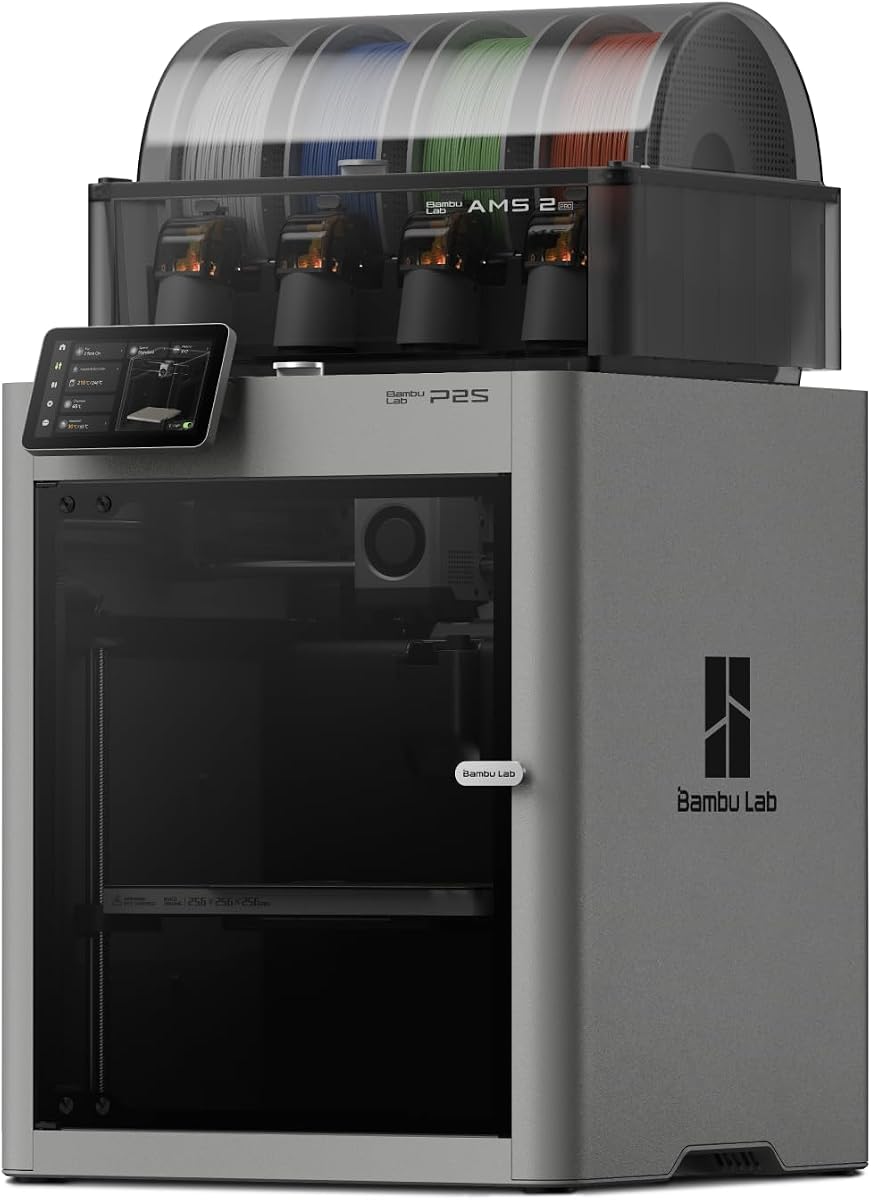
The P2S brings professional capabilities to education, including multi-color and material features. Its high rating reflects robust performance that can handle advanced materials, preparing students for industry standards in design and engineering.
We may earn a commission when you buy through this link, at no additional cost to you.
Adaptive airflow and filament drying ensure consistent quality across different projects. The system is designed for reliability and speed, reducing the time educators spend troubleshooting and increasing the time available for creative exploration.
However, the cost is high. It is best for institutions with significant budgets aiming to provide a world-class lab. The features justify the investment for schools focused on advanced vocational training or specialized design courses.
Educators seeking to bridge the gap between learning and industry will appreciate this model. It introduces students to professional workflows, making the transition to higher education or careers smoother and more informed.
Built-in filament drying ensures moisture-free material, teaching students the importance of material preparation and storage in achieving consistent print results.
Smart cooling systems automatically adjust based on the model, allowing for a variety of projects without manual tweaks, simplifying the learning curve for complex designs.
We may earn a commission when you buy through this link, at no additional cost to you.
The Adventurer 5M offers strong value with high-speed features at a competitive price. It provides reliable performance for classrooms seeking affordable solutions without compromising too much on speed or usability.
We may earn a commission when you buy through this link, at no additional cost to you.
Vibration compensation ensures that even at high speeds, prints remain clean. The dual-sided PEI plate makes removal easy, reducing physical effort for students and ensuring that models are removed without damage or struggle.
While it lacks some advanced features, it covers the basics well. It is a solid choice for schools needing multiple units within a budget, balancing cost and functionality effectively.
Educators looking for cost-effective scalability will find this model attractive. It allows for the purchase of multiple machines, ensuring every student has access to printing resources without breaking the budget.
This feature prevents ghosting in prints, ensuring clean surfaces even at high speeds and maintaining quality standards necessary for detailed student work.
The PEI plate design reduces physical strain when removing prints, making the process safer and more accessible for younger students with less dexterity.
We may earn a commission when you buy through this link, at no additional cost to you.
Choosing the right printer depends on your budget, space, and the technical level of your students. These factors help narrow down options to models that support educational goals effectively.
Enclosed designs and safety certifications like GreenGuard are vital for classrooms to protect students from hot surfaces and airborne particles. Look for anti-pinch mechanisms and cool-touch exteriors if children will operate the printer.
Prioritize models with robust safety features to ensure a secure learning environment that minimizes risks during hands-on activities.
Auto-leveling and auto-calibration simplify operation, allowing students to focus on design rather than mechanical setup. A user-friendly interface and touchscreen help beginners navigate settings without frustration.
Select printers with automation features to reduce maintenance time and technical barriers for novice users.
The build volume determines the size of objects students can create. Compact models fit better in limited spaces, while larger volumes support more ambitious projects for advanced courses.
Match the build size to the typical scale of your curriculum projects to balance space constraints and creative freedom.
Faster printers reduce wait times, enabling more iterations and experiments within a class period. High acceleration and print speeds keep momentum high and support agile learning.
Choose speed to match your lesson plan needs, ensuring that students stay engaged without long downtimes.
Most educational needs focus on PLA and PETG, but advanced labs may require ABS or engineering plastics. Enclosed printers handle high-temperature materials better.
Consider future curriculum needs to ensure the printer can support a range of materials as skills grow.
Cloud access, model libraries, and intuitive slicers streamline workflows. Apps with guided projects and remote monitoring allow teachers to manage classrooms more efficiently.
Evaluate software ecosystems to ensure they align with your teaching methods and student skill levels.
Total cost of ownership includes materials, maintenance, and potential replacements. Affordable models allow for multiple units, while higher-end machines offer durability and advanced features.
Balance upfront costs with long-term value to maximize resources for your educational program.
Quiet operation ensures the printer does not disrupt lectures or focused work. Noise-canceling motors and enclosures help maintain a conducive learning atmosphere.
Prioritize low-noise models for shared spaces to avoid distractions during learning.
Always check the bed leveling before starting a print. Auto-leveling systems help, but verifying the first layer ensures adhesion and quality.
Keep the build plate clean and free of debris. Wipe it with isopropyl alcohol to remove oils that can affect print adhesion.
Store filament in a dry place to prevent moisture absorption. Dry spools regularly if they are exposed to humid environments.
The Ugee Funbox is ideal for elementary students due to its safety features, colorful library, and simple setup. It requires zero calibration and is designed specifically for kids.
Basic printing can be learned in a few hours. Students can start with pre-designed models and gradually learn design software over weeks of practice.
Yes, models with enclosed bodies and safety certifications like Ugee Funbox are safe. Always supervise children when the printer is running and teach basic safety rules.
PLA is the best material for beginners. It is easy to print with, has low odor, and is biodegradable. Most educational printers support PLA out of the box.
Yes, 3D printers are great for classrooms. They support STEM learning and project-based learning when placed in a well-ventilated area with supervision.
Maintenance includes occasional nozzle cleaning and lubrication. Auto-calibrating models need less maintenance, saving time for educators focused on teaching rather than troubleshooting.
Yes, students can use tools like Tinkercad or Blender to design models. Many printers come with software that simplifies this process for younger users.
Common print sizes range from 10cm to 30cm per dimension. This is sufficient for most educational prototypes and small functional parts needed in school projects.
The Ugee Funbox, Entina Tina2C, and Snapmaker U1 offer the best blend of safety, speed, and features for various educational needs. Each model supports different aspects of learning from basic prototyping to advanced engineering.
Prioritize safety features and ease of use to maximize classroom time. A machine that works reliably without constant setup ensures that the focus remains on creativity and education rather than technical issues.
Prices and availability change regularly. Always verify current details and availability before purchasing to ensure you get the best value and support for your educational program.