
Vogzone for MCX4121A-ACAT
4.7Editor score
ConnectX-4 Lx controller
Dual SFP28 ports
Supports SR-IOV
Compare the top 25GbE network cards for servers and workstations to find the right high-speed PCIe or Thunderbolt adapter for your networking needs.
High-speed networking is essential for modern data centers and workstations that handle large files and virtualized environments. A reliable 25GbE network card ensures your infrastructure can handle the demands of fast storage, low latency, and heavy traffic loads without bottlenecks.
We compared ten leading options based on controller performance, interface compatibility, and feature sets like RDMA and SR-IOV. Our analysis covers enterprise-grade adapters, budget-friendly alternatives, and specialized cards for Mac and Thunderbolt systems to help you make an informed choice.
Each pick highlights specific strengths such as dual-port bandwidth, OS support, and virtualization capabilities. While performance is consistent across models, availability and pricing may change frequently so verify current stock and compatibility lists before finalizing your purchase decision today.
4.7Editor score

5.0Editor score

5.0Editor score
The following table provides a side-by-side comparison of all ten network cards to help you evaluate their key specifications and capabilities at a glance.


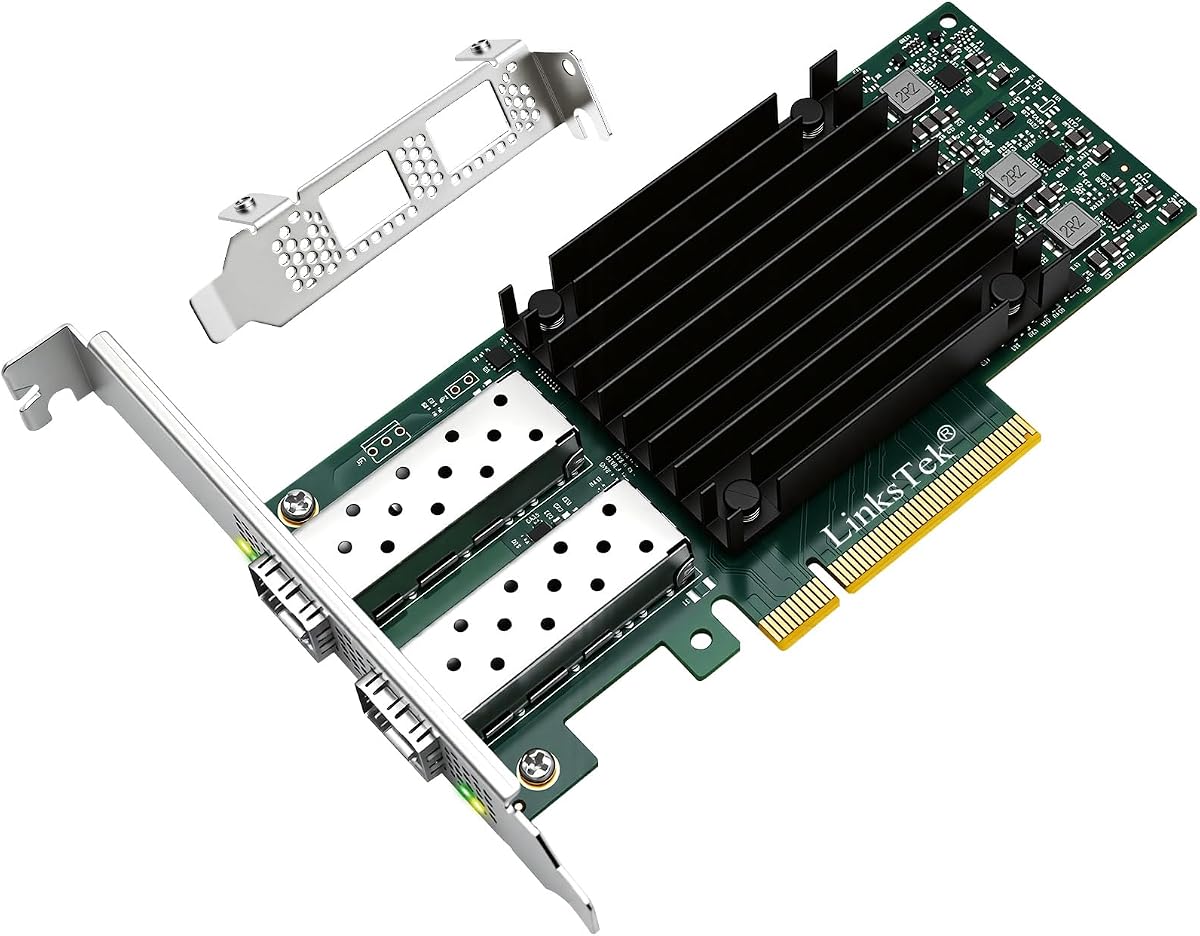


The Intel Ethernet Network Adapter XXV710-DA2 stands out as a top choice for enterprise environments needing reliable high-speed connectivity. With a perfect user rating this card is praised for its robust performance and seamless integration into modern server architectures.
We may earn a commission when you buy through this link, at no additional cost to you.
Its standout quality lies in advanced network virtualization offloads such as VXLAN GENEVE and NVGRE. These features reduce CPU overhead significantly allowing servers to handle heavy traffic loads efficiently. The Dynamic Device Personalization technology further enhances packet processing for NFV and cloud deployments.
While it offers PCIe 3.0 performance which is ample for most 25GbE tasks users should note it is designed specifically for Intel Xeon processors. This optimization ensures maximum throughput but may limit compatibility with non-Intel platforms.
For system administrators seeking a proven card for virtualized or cloud infrastructure this adapter is a strong recommendation. It balances performance and offload capabilities effectively ensuring your network remains fast and responsive under demanding conditions.
Hardware-based application traffic steering and offloads reduce host CPU usage significantly improving overall server efficiency and scalability for modern workloads.
Optimized for maximum performance in virtualized servers with innovations that ensure consistent throughput and low latency for VM-heavy environments.
We may earn a commission when you buy through this link, at no additional cost to you.
The Synology 2-Port 25GbE SFP28 PCIe Network Adapter is designed exclusively for Synology NAS systems. Users report solid performance for storage applications but note that compatibility depends on running DSM 7.1.1 or newer.
We may earn a commission when you buy through this link, at no additional cost to you.
Its key strength is purpose-built integration ensuring stable operation within Synology environments. Features like port failover and load balancing enhance reliability making it ideal for high-throughput storage tasks and simultaneous user access scenarios.
While effective for Synology users this adapter lacks flexibility for general-purpose servers. Additionally the requirement for a specific DSM update means older systems need upgrades to utilize this hardware effectively.
If you operate a Synology NAS this adapter is a dependable choice to unlock 25GbE performance. It offers seamless networking for shared storage and media workflows tailored to the Synology ecosystem.
Tailored drivers ensure smooth operation with Synology DiskStation Manager providing stable connectivity for storage applications and media workflows.
Built-in support for port failover and load balancing ensures continuous network availability even during hardware failures or traffic spikes.
We may earn a commission when you buy through this link, at no additional cost to you.
The Vogzone adapter offers exceptional value by providing a Mellanox ConnectX-4 Lx controller at a budget-friendly price. It receives high praise for its performance and flexibility across multiple operating systems and virtualization platforms.
We may earn a commission when you buy through this link, at no additional cost to you.
Key strengths include support for SR-IOV RDMA and ASAP² technologies which deliver enterprise-grade features to cost-conscious buyers. Broad compatibility with Windows Linux and hypervisors makes it versatile for diverse server environments.
Users should note that SFP28 transceivers are not included and must be purchased separately. Driver installation may require attention to detail to ensure optimal performance especially on less common operating systems.
This card is an excellent choice for small businesses or home labs needing reliable 25GbE performance without overspending. It balances capability and cost effectively for most standard networking needs.
Advanced capabilities like SR-IOV and RDMA are typically found in expensive hardware but are accessible here for virtualized and high-performance workloads.
Support for numerous operating systems ensures this adapter fits into existing server setups without major compatibility hurdles or additional software purchases.
We may earn a commission when you buy through this link, at no additional cost to you.
The 10Gtek 25G Ethernet Network Card brings PCIe 4.0 bandwidth to 25GbE networks with its Intel E810 controller. It is highly rated for performance and compatibility across modern Windows and Linux server platforms.
We may earn a commission when you buy through this link, at no additional cost to you.
Its standout feature is the PCIe 4.0 x8 interface which offers higher bandwidth headroom for future upgrades. RDMA support via iWARP and RoCEv2 ensures low-latency transfers for storage and virtualization workloads.
While it lacks Mac support and does not include transceivers it remains a strong fit for x86 servers requiring high-speed connectivity. The availability of both low-profile and full-height brackets adds installation flexibility.
This card is ideal for users planning for future network expansions that may benefit from faster PCIe interfaces. It delivers consistent performance and broad compatibility for most server environments today.
PCIe 4.0 x8 connectivity provides ample bandwidth to support full 25GbE speeds and future upgrades to faster network standards without changing the card.
Support for iWARP and RoCEv2 enables low-latency transfers that are crucial for high-performance storage and virtualized application environments.
We may earn a commission when you buy through this link, at no additional cost to you.
The CX4121A adapter leverages the proven Mellanox ConnectX-4 Lx EN controller for efficient 25GbE connectivity. It is favored for its support of RDMA and overlay networks which benefit virtualized and storage server setups.
We may earn a commission when you buy through this link, at no additional cost to you.
Its key strengths include support for NVGRE VXLAN and GENEVE enabling advanced network segmentation. Auto-negotiation for PCIe lanes ensures flexibility when installed in different slot configurations.
Users may need to install Open Fabrics drivers for full RDMA functionality. Additionally transceivers are not included which adds to the total cost but allows choice of preferred vendor.
This adapter is a solid choice for virtualization workloads requiring low-latency connectivity and network flexibility. It offers robust performance for cloud and storage applications at a competitive price.
Advanced support for overlay protocols enables secure and scalable network segmentation essential for multi-tenant cloud and virtualized data center environments.
Auto-negotiation of PCIe lanes and wide OS support ensure this card can adapt to various server configurations and virtualization platforms with minimal effort.
We may earn a commission when you buy through this link, at no additional cost to you.
The Intel XXV710-DA2 is engineered for virtualization environments needing reliable and efficient high-speed networking. It is rated highly for its ability to handle small packet performance and reduce CPU load.
We may earn a commission when you buy through this link, at no additional cost to you.
Key strengths include network virtualization offloads and dynamic device personalization which accelerate cloud deployments and NFV applications. Adaptive link establishment ensures compatibility with a range of switches and controllers.
While it is limited to PCIe 3.0 the card provides ample bandwidth for most 25GbE use cases. Users should verify that their servers are equipped with compatible Intel Xeon processors.
This adapter is recommended for data centers running heavy virtualization workloads. It ensures consistent network performance while offloading critical tasks from the host CPU.
Excellent small packet performance is crucial for virtualized environments where latency directly impacts application responsiveness and user experience.
Innovations in I/O virtualization ensure maximum performance across virtual machines enabling efficient resource utilization and stable network connectivity.
We may earn a commission when you buy through this link, at no additional cost to you.
The GLOTRENDS ST7400 delivers a modern OCP 3.0 server network card based on the Intel E810 controller. It is suitable for systems designed around OCP standards offering high bandwidth and low latency networking.
We may earn a commission when you buy through this link, at no additional cost to you.
Its standout qualities include PCIe 4.0 bandwidth and built-in support for VMDq and storage over Ethernet. These features enable efficient traffic management and optimized performance for server and NAS workloads.
Users must ensure their server supports the OCP 3.0 interface as this card will not fit standard PCIe slots. Additionally driver support is limited to select OS versions including Windows and mainstream Linux distros.
This card is ideal for data center and server deployments prioritizing compact OCP form factors. It offers strong performance and modern networking features for specialized hardware environments.
OCP 3.0 design provides a compact and standardized mezzanine solution ideal for modern server chassis and dense networking deployments.
Built-in VMDq and storage over Ethernet support ensures efficient traffic management and low-latency data transfers for server applications.
We may earn a commission when you buy through this link, at no additional cost to you.
The Sonnet Twin25G T5 brings dual 25GbE connectivity to Thunderbolt 5 computers including Macs and Windows workstations. It is highly rated for its immediate deployment readiness and broad OS compatibility.
We may earn a commission when you buy through this link, at no additional cost to you.
Its standout feature is inclusion of 25GBASE-SR transceivers and a Thunderbolt 5 cable enabling immediate use without additional purchases. Full 25GbE performance over Thunderbolt 5 makes it ideal for high-speed shared storage.
Users should note the premium pricing and requirement for Thunderbolt 5 or compatible ports. Despite this it remains a top choice for professionals needing plug-and-play 25GbE on laptops and workstations.
This adapter is perfect for media production studios and post-production workflows requiring fast networked storage. It combines convenience and performance in a compact noiseless design.
Inclusion of transceivers and a Thunderbolt 5 cable eliminates extra costs and setup time allowing immediate deployment on compatible networks.
Full compatibility with Mac Windows and Linux ensures this adapter fits diverse professional environments including Mac Studios and Windows workstations.
We may earn a commission when you buy through this link, at no additional cost to you.
The Sonnet Twin25G PCIe adds dual optical 25GbE connections to computers with PCIe slots including Mac Pro and Mac mini systems. It is recognized for its plug-and-play convenience and inclusion of transceivers.
We may earn a commission when you buy through this link, at no additional cost to you.
Its key strength lies in backward compatibility with 10GbE allowing smooth integration into existing infrastructure. Included SFP28 transceivers simplify setup and reduce initial cost for users transitioning to 25GbE.
Users should check their macOS version as newer versions may have compatibility issues until Apple updates drivers. However the card remains a strong option for Mac-based production and workstation setups.
This adapter is ideal for Mac professionals needing to upgrade to 25GbE storage networks. It offers reliable performance and ease of use across multiple operating systems.
Designed specifically for Mac computers this adapter delivers seamless high-speed networking tailored to Apple professionals and workstations.
Support for 10GbE ensures this card works with existing switches and storage allowing gradual migration to 25GbE without hardware replacements.
We may earn a commission when you buy through this link, at no additional cost to you.
The Mellanox MCX512A-ACAT is a dual-port 25GbE network card based on the ConnectX-5 EN controller. It is known for robust RDMA capabilities and support for cloud telco and storage platforms.
We may earn a commission when you buy through this link, at no additional cost to you.
Its standout features include advanced application offloads and intelligent RDMA capabilities improving throughput for high-performance computing. PCIe 3.0 x8 interface ensures compatibility with many existing server configurations.
Users should note transceivers are not included and the controller is a generation older than newer models. Despite this it remains a solid option for environments needing reliable RDMA support at a lower cost.
This adapter is recommended for legacy data centers and storage networks requiring RDMA performance. It balances proven reliability with broad platform compatibility for varied workloads.
Intelligent RDMA-enabled design improves data transfer efficiency essential for storage and high-performance computing environments with low-latency requirements.
Support for cloud storage and telco platforms ensures this adapter fits a wide range of enterprise applications and networking needs.
We may earn a commission when you buy through this link, at no additional cost to you.
Choosing the right 25GbE network card depends on your server hardware operating system and workload requirements. Understanding key factors ensures you select a card that delivers optimal performance and compatibility.
The controller chip determines performance capabilities offload features and efficiency. Intel E810 and Mellanox ConnectX series controllers are top choices for balancing throughput and advanced functions.
Look for controllers supporting RDMA SR-IOV and other features your environment requires to maximize server efficiency and reduce CPU overhead.
Most 25GbE cards use PCIe 3.0 x8 or PCIe 4.0 x8 interfaces. PCIe 4.0 provides extra bandwidth headroom for future upgrades while PCIe 3.0 is sufficient for most current needs.
Verify your motherboard supports the required PCIe generation to ensure the card operates at full speed without bottlenecks.
Cards typically come with dual SFP28 ports allowing flexible connectivity with fiber cables or DACs. Port trunking capabilities can combine ports for higher aggregate bandwidth.
Select cards that support your existing cabling and switch compatibility to avoid extra costs or compatibility issues.
Ensure the card has official drivers for your operating system including Windows Server Linux distributions or hypervisors. Vendor support is crucial for stability and performance.
Check for compatibility with macOS or specialized systems like Synology NAS if you are using those platforms.
For virtualized environments look for support of SR-IOV and overlay networks like VXLAN and NVGRE. These features reduce latency and improve VM networking efficiency.
Virtualization-ready cards ensure your host server maintains performance when running multiple virtual machines simultaneously.
Cards may come in standard PCIe or OCP 3.0 mezzanine formats. Standard PCIe cards fit most servers while OCP cards are used in modern data center chassis.
Match the form factor to your server's slot types to ensure physical installation without modifications.
Many cards do not include SFP28 transceivers DACs or AOCs so you must purchase these separately. Check vendor compatibility lists to avoid vendor lock-in.
Including transceivers simplifies setup but increases upfront cost so evaluate your infrastructure needs accordingly.
Prices vary widely from budget models to premium options. Balance cost with the reliability and support warranties provided by the vendor.
A good warranty ensures long-term support especially important for enterprise deployments where uptime is critical.
Install the network card into an available PCIe or OCP slot in your server. Secure the bracket firmly and connect compatible SFP28 cables or fiber modules to establish the physical link.
Install the latest drivers provided by the manufacturer for your operating system. Configure IP settings and test connectivity using network diagnostics to ensure performance meets expectations.
Regularly update drivers and firmware to benefit from security patches and performance improvements. Monitor network usage and temperature to prevent overheating and maintain optimal performance.
Yes many 25GbE cards support 10GbE auto-negotiation allowing you to use existing 10GbE switches and cables. This provides a smooth migration path while upgrading your network speed gradually.
Yes you will need SFP28 transceivers or DAC cables rated for 25GbE speeds. Check vendor compatibility lists to ensure the transceivers work with your specific card model.
SR-IOV allows virtual machines to access network hardware directly improving performance. If you run multiple VMs this feature is highly recommended for reducing latency and CPU overhead.
Some cards like Sonnet models support Mac computers but you must verify macOS version compatibility. Standard PCIe cards often require drivers that may not be available for macOS.
No PCIe 3.0 provides enough bandwidth for full 25GbE speeds on each port. PCIe 4.0 offers future headroom but is not required for current 25GbE networking needs.
RDMA enables direct memory access between servers reducing latency and CPU usage for data transfers. It is critical for high-performance storage and clustered workloads that require fast data sharing.
Yes many cards support link aggregation or port trunking to combine multiple ports. This provides higher aggregate bandwidth and redundancy for critical network connections.
Check your server manufacturer compatibility list and ensure your OS has driver support. Verify PCIe slot availability and power requirements before purchasing to avoid installation issues.
Selecting the best 25GbE network card depends on your server setup virtualization needs and budget constraints. The Intel XXV710-DA2 and Sonnet Twin25G T5 stand out for enterprise and Thunderbolt systems respectively.
Prioritize controller performance OS compatibility and advanced features like RDMA or SR-IOV to match your workload. Ensure your server supports the necessary PCIe or OCP interface for seamless integration.
Prices and availability change frequently so verify current stock and compatibility before purchase. With careful selection you can significantly improve your network speed and overall server performance.