
10 Pack 3 Pins AMS1117-3.3
4.1Editor score
Affordable 10-pack value
Simple 3-pin design
Overheat shutdown protection
This guide compares the top 5V to 3V voltage regulator options for stable power conversion in electronics, embedded systems, and portable projects.
Finding the right voltage regulator is crucial for protecting sensitive electronics from power fluctuations. A good 5V to 3V regulator ensures stable output for microcontrollers and sensors.
We evaluated ten top-rated models based on efficiency, size, current capacity, and customer feedback. Each product was analyzed for real-world reliability and ease of integration into your projects.
Each pick highlights key features, pros, cons, and ideal use cases to help you decide. Note that prices may fluctuate, so check current listings before purchasing your next component.
4.1Editor score

4.6Editor score

5.0Editor score
The following table provides a side-by-side comparison of all ten products reviewed, highlighting their input voltage ranges, maximum output current, and key protective features.


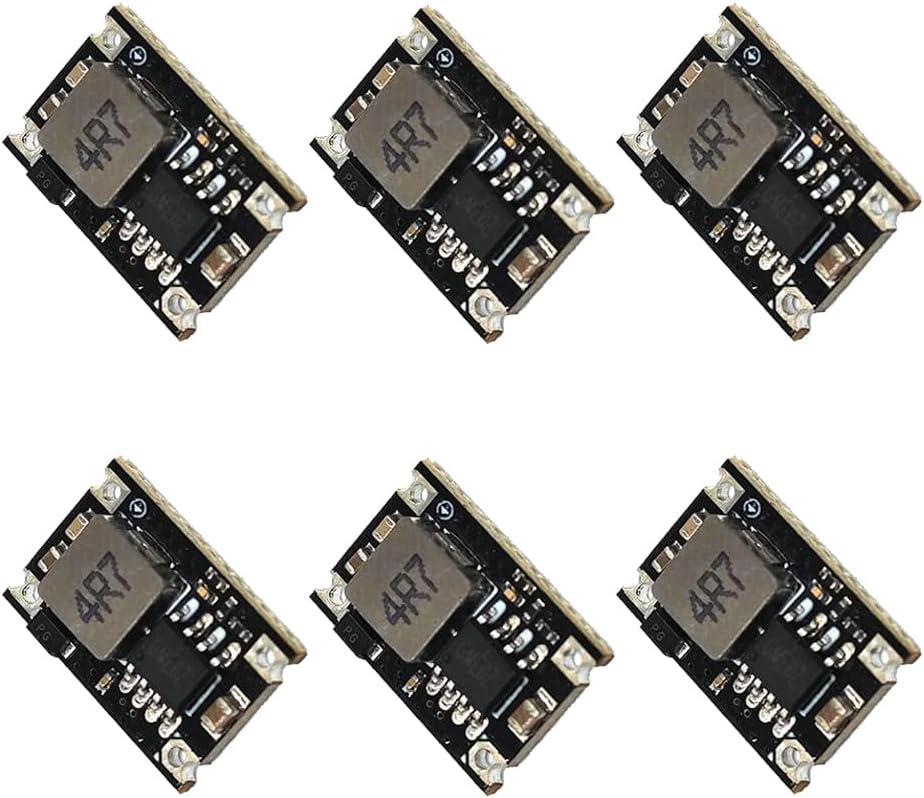
This top-rated buck converter module delivers exceptional versatility for electronics enthusiasts. With a 4.6-star rating, users praise its ability to stabilize power from wide input ranges down to a clean 3.3V output.
We may earn a commission when you buy through this link, at no additional cost to you.
The module handles up to 1.8A, making it suitable for microcontrollers and sensors. Its ultra-small footprint allows integration into tight spaces, while the low ripple ensures stable power for sensitive circuits.
While it performs admirably, note that inductive loads like motors need additional protection components. This is a standard requirement for buck converters and not a flaw in the unit itself.
Buy this if you need a reliable, high-current regulator for multiple projects. It offers the best balance of performance, size, and value in this roundup.
The 4.5V to 24V input range supports various power sources including 9V, 12V, and 24V supplies.
Measuring just 17.5x12x4.5mm, it fits easily into portable and embedded project enclosures.
We may earn a commission when you buy through this link, at no additional cost to you.
This AMS1117-3.3 pack is ideal for hobbyists needing stable low-voltage power on a budget. Its 4.1 rating reflects consistent performance for basic Arduino and STM32 projects.
We may earn a commission when you buy through this link, at no additional cost to you.
The 3-pin design simplifies connections, and the overheat shutdown circuit adds crucial safety. It handles up to 0.8A, sufficient for most logic-level components and sensors.
However, its input range tops at 12V, limiting use with higher-voltage sources. Buck converters offer broader input ranges but at a higher cost per unit.
Choose this for low-power applications where cost matters most. It provides reliable regulation for MCUs without breaking the bank.
The single-row 2-pin input and output headers make wiring straightforward for beginners.
Overload and over-temperature protection prevent chip damage under abnormal working conditions.
We may earn a commission when you buy through this link, at no additional cost to you.
With a flawless 5.0 rating, this Mini360-based module offers premium performance for demanding applications. It excels at delivering clean power to sensitive electronics in tight spaces.
We may earn a commission when you buy through this link, at no additional cost to you.
Its output current reaches 1.5A, while ripple stays below 30mV. The switching frequency of 1MHz to 1.5MHz ensures efficient operation with minimal heat generation.
The main trade-off is cost, but for reliability and compact size, it justifies the expense. It also requires external protection for motors, similar to other buck types.
Opt for this if you need the smallest footprint with high current. It is the top choice for wearables, drones, and high-end IoT devices.
The Mini360 chip delivers high efficiency with a compact board design for space-constrained layouts.
Less than 30mV ripple keeps noise low for precision sensors and analog circuits.
We may earn a commission when you buy through this link, at no additional cost to you.
This unique converter handles inputs as low as 1.8V, stepping them up to 3.3V. A 5.0 rating highlights its value for battery-powered devices where voltage drops over time.
We may earn a commission when you buy through this link, at no additional cost to you.
Ideal for coin cells or single Li-ion cells, it ensures stable 3.3V even as the battery drains. The step-up/down function is rare at this price point.
However, with only 100mA capacity, it cannot drive motors or Wi-Fi modules. It is strictly for low-power sensors or logic circuits.
Buy this for battery projects where input voltage varies. Its flexibility makes it a valuable addition to any maker's toolkit.
Step-up capability allows use with batteries that output less than 3.3V.
Optimized for devices drawing minimal current, such as sensors and timers.
We may earn a commission when you buy through this link, at no additional cost to you.
This Dorhea pack offers a balanced option for users needing multiple regulators at a low cost. The 4.2 rating indicates reliable performance for standard embedded projects.
We may earn a commission when you buy through this link, at no additional cost to you.
The AMS1117 chip ensures steady 3.3V output with overheat protection. It works well with Arduino and ESP8266 boards requiring less than 800mA.
Linear regulators can generate heat at high currents, so ensure adequate ventilation. This is a minor trade-off for the simplicity of design.
Consider this for prototyping multiple boards without overspending. It is a dependable choice for low-power, steady-voltage applications.
Provides very clean output with minimal ripple compared to switching regulators.
Compatible with most development boards requiring 3.3V power rails.
We may earn a commission when you buy through this link, at no additional cost to you.
With a perfect 5.0 rating and 15 units, this pack is ideal for bulk projects or stocking a workshop. It delivers consistent 3.3V with high precision.
We may earn a commission when you buy through this link, at no additional cost to you.
The ±2% accuracy ensures stable voltage even under load changes. Safety features like overheat protection and a wide temp range make it robust.
As a linear regulator, it drops voltage as heat. Keep it within the 12V max input to avoid overheating during extended use.
Buy this for large-scale builds needing many regulators. Its value and reliability make it a top pick for serious hobbyists.
Voltage accuracy of ±2% ensures precise power for sensitive logic circuits.
Overheat and overcurrent protection prevent chip damage during abnormal conditions.
We may earn a commission when you buy through this link, at no additional cost to you.
This module delivers high current in a tiny footprint, making it great for space-limited projects. While its rating is mixed, users value its compact form and strong output.
We may earn a commission when you buy through this link, at no additional cost to you.
With 1.8A capability, it can drive substantial loads. The PCB features a reverse polarity mark to prevent wiring errors during installation.
Users note that quality control can vary, so testing is recommended before integration. It performs well when installed correctly and protected from shorts.
Consider this for projects prioritizing size and current over absolute reliability. It is a viable option when budget and space are tight constraints.
Dimensions of 0.67×0.24×0.16 inches save valuable PCB real estate.
Reverse polarity marks help prevent accidental wiring mistakes that could damage the board.
We may earn a commission when you buy through this link, at no additional cost to you.
This module supports inputs up to 30V, ideal for 24V industrial systems or vehicle power. It delivers stable 3.3V suitable for microcontrollers and sensors.
We may earn a commission when you buy through this link, at no additional cost to you.
With 1.8A peak current, it can handle brief surges well. The compact design fits wearables and IoT devices needing reliable power from batteries.
As a newer item, it lacks user reviews. However, specs match proven buck converters, suggesting solid performance for most standard use cases.
Buy this for 24V or vehicle projects needing high voltage tolerance. It offers great flexibility for non-standard power inputs.
Supports 4.5V to 30V input for use with 24V batteries and solar panels.
Fits easily into tight layouts for IoT devices and portable electronics.
We may earn a commission when you buy through this link, at no additional cost to you.
Designed for inputs between 4.5V and 7V, this module pairs perfectly with USB-powered 5V systems. A perfect 5.0 rating indicates strong reliability for standard use.
We may earn a commission when you buy through this link, at no additional cost to you.
It outputs 3.3V at up to 800mA. This matches well for Arduino and ESP boards powered by USB or regulated 5V sources.
However, input must stay above 4.5V. If your source drops lower, the regulator will fail to maintain stable output voltage.
Choose this for USB-based projects. Its efficiency and simplicity make it ideal for low-power, 5V-source conversions.
Designed to work with standard 5V USB power sources for easy prototyping.
Ten units allow multiple projects or sharing with fellow hobbyists.
We may earn a commission when you buy through this link, at no additional cost to you.
Featuring the MP1584EN chip, this module is built for high performance. Its 4.9 rating reflects reliability in demanding applications like RC aircraft and robotics.
We may earn a commission when you buy through this link, at no additional cost to you.
With 1.8A output, it powers servos and logic circuits effectively. The small size fits tight spaces in compact drones and model builds.
Be sure to add capacitors for inductive loads to avoid noise issues. This is standard practice and ensures long-term circuit stability.
Buy this for robotics or RC models needing robust power. Its balance of current, size, and chip quality makes it a premium choice.
Uses a high-efficiency switching chip optimized for compact power delivery.
Designed to handle power demands typical in model aircraft and drones.
We may earn a commission when you buy through this link, at no additional cost to you.
Selecting the right voltage regulator depends on input voltage, current needs, and physical constraints. This guide covers the essential factors for making the right choice.
Ensure the regulator supports your source voltage. Buck modules typically handle 5V to 24V or even 30V, while linear regulators often max at 12V.
Check input limits to avoid damaging the regulator or losing regulation efficiency.
Match the regulator's current to your load. Buck converters offer 1.5A to 1.8A, while linear types like AMS1117 cap around 800mA.
Underestimating current leads to voltage drops or regulator overheating.
Switching buck regulators are efficient but produce slight noise. Linear regulators offer cleaner power but waste energy as heat.
Choose switching for battery life and linear for precision analog circuits.
Space-constrained projects benefit from Mini360 or similar tiny boards. Standard modules are slightly larger but easier to solder.
Measure your enclosure dimensions before buying to ensure a proper fit.
Look for built-in overheat and overcurrent protection. These safeguard your electronics against short circuits or accidental overloads.
Modules without protection require external fuses or resettable circuit breakers.
Motors and servos generate back EMF that can damage regulators. Use capacitors and diodes as recommended in manuals.
Always isolate inductive loads from sensitive digital power lines.
Some modules include header pins; others require soldering. Verify the connection method matches your tools and skill level.
Soldering wires offers reliability but needs care to avoid shorts.
Multi-packs reduce cost per unit. Consider how many regulators you need for current and future projects.
Bulk options are ideal for prototyping multiple circuits at once.
Connect input power to the VIN pin and ground to GND. Output from VOUT provides 3.3V to your load. Always double-check wiring to avoid reversing polarity.
Add capacitors near input and output pins as per the module's guidelines. This reduces noise and improves stability for sensitive electronics.
Allow space for airflow if current draw exceeds 500mA. Heat dissipation is key for long-term reliability, especially with linear regulators.
Yes, most buck modules support input up to 24V or 30V. Ensure the regulator's max input exceeds your source voltage. Check datasheets for exact ranges before connecting.
Linear regulators provide cleaner output but waste energy as heat. Switching buck regulators are efficient and handle higher currents. Choose based on heat tolerance and efficiency needs.
Yes, both 3.3V and 5V boards work if they support 3.3V input. Many modules are designed specifically for Arduino and ESP development needs.
Add a flyback diode and capacitor across the motor terminals. This prevents voltage spikes from feeding back into the regulator's output pin.
Heat can result from high current draw or high input voltage. Ensure airflow and check that load current is within limits for the module type.
Typically 10µF to 22µF on input and output is recommended. Consult the module's manual for exact specifications to ensure stability.
The 5pcs 3.3V Buck Converter Module stands out as the best overall choice for its range and capacity. For budget builds, the AMS1117 packs offer reliable low-power performance.
Consider your specific project requirements. If space is tight, the Mini360 modules deliver power efficiently. For vehicle or solar power, look at wider input range options.
Prices and availability change frequently. Review the current listings and check customer feedback before making your final purchase decision.